iceAI Studio vous donne un contrôle total sur les connaissances de vos agents IA et sur la façon dont ils dirigent les clients, favorisant ainsi des résolutions plus rapides et de meilleures expériences.
De la norme PCI-DSS à la certification SOC 2, le centre de contact ice est bâti sur un cadre de conformité qui saura satisfaire votre équipe de sécurité
Outils d'analyse vocale pour les centres d'appels: Un guide
Kent Mao
Publié le :
May 10, 2024
Les bonnes données sont essentielles pour améliorer les opérations de votre centre d'appels. Les outils d'analyse vocale peuvent aider à débloquer les données cachées dans chaque appel.
Pour qu'un centre d'appels soit performant, il est important d'analyser constamment les conversations et de chercher des occasions d'améliorer l'expérience client. Heureusement, les nouveaux outils d'analyse vocale exploitent la puissance de l'IA pour tirer des informations de chaque conversation et transformer les discussions en données exploitables.
Alors, qu'est-ce que l'analyse vocale pour les centres d'appels exactement, comment ça fonctionne, et comment s'assurer de mettre en œuvre la bonne technologie? Ce guide abordera tous ces sujets et plus encore.
Que sont les outils d'analyse vocale pour les centres d'appels?
Les outils d'analyse vocale permettent aux entreprises d'enregistrer, de transcrire et d'analyser les conversations à grande échelle en utilisant l'intelligence artificielle (IA).
Ils fonctionnent en transformant les données audio non structurées en une forme plus structurée qui peut être analysée et extrapolée. Les outils d'analyse vocale utilisent une combinaison de différentes technologies, notamment la reconnaissance vocale, le traitement du langage naturel, l'automatisation et l'apprentissage automatique.
La façon la plus courante d'utiliser l'analyse vocale dans un centre d'appels est pour l'évaluation post-appel. Cela signifie que les entreprises utilisent des outils pour analyser les tendances et les modèles d'un appel une fois la conversation terminée.
Les principaux fournisseurs commencent à intégrer les outils d'analyse vocale avec la surveillance en temps réel, l'enregistrement et la transcription des services. Cela permet aux entreprises de fournir aux agents et aux superviseurs des données en temps réel pendant une conversation en direct.
Cas d'utilisation pour l'analyse vocale
Voici quelques cas d'utilisation courants pour les outils d'analyse vocale :
Optimiser l'assurance qualité: Les outils d'analyse vocale fournissent des informations sur la performance des agents, contribuant à identifier les forces et les faiblesses pendant et après un appel. Cela aide les entreprises à identifier les problèmes qui pourraient nuire à la qualité des interactions avec les clients.
Améliorer la formation des agents: En fournissant des informations sur les forces et les faiblesses des agents, les outils d'analyse vocale peuvent aider à identifier les employés qui ont besoin de soutien supplémentaire et de formation, et quel type de formation est nécessaire. Certaines solutions peuvent même être combinées avec la technologie d'agent virtuel, pour offrir un encadrement et des conseils en temps réel aux employés sous la forme de chatbots d'assistance aux agents.
Améliorer l'expérience client: En analysant le sentiment des clients et les tendances des conversations, les responsables de centres d'appels peuvent identifier des opportunités d'améliorer l'expérience client. Certains outils d'analyse vocale peuvent même aider à analyser les taux d'utilisation du libre-service et les opportunités d'automatisation.
Maintenir la conformité: Dans les secteurs soumis à des normes strictes de conformité réglementaire, les outils d'analyse vocale peuvent aider à garantir que les agents respectent des scripts spécifiques, divulguent les informations légales nécessaires et suivent les meilleures pratiques en matière de sécurité des données.
Améliorer la prise de décision: Les outils d'analyse vocale peuvent aider les entreprises à prendre des décisions commerciales plus éclairées en cartographiant le parcours client et en identifiant les points de friction et les opportunités. En fin de compte, la mise en œuvre de ces outils dans votre centre d'appels peut contribuer à une meilleure gestion des ressources et à une croissance accélérée.
Analyse vocale c. Analyse conversationnelle
Dans les centres d'appels, l'analyse vocale et l'analyse conversationnelle sont deux technologies cruciales utilisées pour extraire des informations des interactions client, mais elles se concentrent sur des aspects et des cas d'utilisation légèrement différents.
L'analyse vocale implique principalement l'analyse des mots prononcés pour en extraire des informations utiles. Elle se concentre sur le contenu littéral de ce qui est dit pendant les appels. Les aspects clés de l'analyse vocale comprennent la transcription, la détection de mots-clés et la détection d'émotions.
L'analyse conversationnelle, quant à elle, va plus loin en analysant non seulement les mots, mais aussi en comprenant le contexte et en extrayant des informations plus approfondies des conversations. Cela inclut la reconnaissance d'intention, l'analyse des interactions et l'évaluation de la performance des agents.
Cependant, dans la plupart des cas, les termes analyse vocale et analyse conversationnelle sont utilisés de manière interchangeable et la plupart des outils logiciels offrent une gamme complète de fonctionnalités.
Avantages des outils d'analyse vocale
À mesure que les modèles d'IA évoluent, les outils d'analyse vocale peuvent aider les entreprises à comprendre le parcours de leurs clients, à s'adapter à l'évolution de la dynamique du marché et même à réduire les coûts en optimisant l'allocation des ressources.
Les bons outils d'analyse vocale peuvent offrir de nombreux avantages à votre centre d'appels.
Meilleure compréhension du parcours client
Le parcours client d'aujourd'hui est multifacette, impliquant souvent de nombreux points de contact et des conversations. Les logiciels d'analyse vocale peuvent vous aider à obtenir des informations plus approfondies sur chaque étape du parcours client. Ils peuvent également aider à identifier les points sensibles courants que vos clients doivent aborder lorsqu'ils contactent votre centre d'appels.
Le bon logiciel peut regrouper des informations sur les sujets courants et le sentiment des clients à partir de milliers d'appels, brossant un tableau clair des problèmes rencontrés par vos clients. Ces informations peuvent aider à orienter votre stratégie de service client afin de réduire l'effort client, vous aider à allouer les ressources plus efficacement et même vous fournir les conseils nécessaires pour développer de meilleurs programmes d'intégration pour les nouvelles recrues.
Réduction des taux de désabonnement des clients
Les logiciels d'analyse vocale permettent aux entreprises d'analyser les interactions enregistrées et en temps réel. Ce faisant, vous pouvez facilement identifier les interactions qui augmentent la satisfaction et les taux de rétention des clients, et celles qui mènent au désabonnement des clients.
Par exemple, si vous remarquez que des temps d'attente prolongés ou des transferts d'appels réguliers entraînent une réduction de vos taux de rétention de clientèle, vous pouvez mettre en œuvre des stratégies de routage d'appels intelligentes pour y remédier. Alternativement, si vous découvrez que vos clients ont du mal à naviguer dans votre menu SVI lorsqu'ils contactent votre centre d'appels. Pour y remédier facilement, vous pouvez repenser votre arborescence téléphonique et introduire des solutions SVI intelligentes.
Augmentation des revenus
Les outils d'analyse vocale ne se contentent pas de donner aux entreprises un moyen d'identifier les problèmes qui pourraient affecter la satisfaction client. Ils peuvent également être utilisés pour identifier des opportunités de stimuler les revenus et la valeur à vie du client. Par exemple, en tirant parti de l'analyse des sentiments, les outils d'analyse vocale peuvent identifier le moment idéal pour présenter des opportunités de vente croisée et de vente incitative aux clients.
Les bons outils peuvent également vous aider à identifier les clients à forte valeur ajoutée et à exploiter les données historiques pour élaborer une stratégie de communication proactive. Les outils d'analyse vocale peuvent vous aider à identifier les clients les plus susceptibles d'apprécier vos nouveaux produits et services, améliorant ainsi les opportunités de croissance des revenus.
Meilleure assurance qualité et performance des agents
Les outils d'analyse vocale peuvent surveiller la performance des agents en temps réel, fournissant des informations instantanées sur les taux de résolution, la conformité aux scripts et les scores de satisfaction client. Les entreprises peuvent détecter instantanément les problèmes potentiels de performance ou de qualité des appels qui pourraient nuire à l'expérience client.
De plus, ils peuvent exploiter les données sur le rendement des employés pour identifier les occasions de formation et de développement. Il est même possible d'utiliser l'analyse vocale pour aider à créer des outils d'assistance aux agents, comme les agents virtuels et les fenêtres contextuelles, ce qui peut améliorer la productivité des employés.
Moins de travail après appel
Les bons outils d'analyse vocale ne se contentent pas de rendre les expériences client plus pratiques et simplifiées, ils peuvent également améliorer l'expérience des employés. Les outils automatisés éliminent le besoin de manuellement consigner des dizaines de conversations, ce qui permet aux agents de consacrer plus de temps à d'autres tâches précieuses.
Des tâches comme la mise à jour des dossiers, la consignation des informations et la mise à jour des notes de CRM peuvent toutes être automatisées grâce aux outils d'analyse vocale améliorés par l'IA.
Cela contribue à améliorer la satisfaction et les taux d'engagement des employés tout en réduisant les coûts opérationnels, garantissant ainsi que les entreprises peuvent tirer le meilleur parti de leurs ressources. Les bons outils peuvent même aider à la planification des flux de travail et à la gestion des effectifs.
Principales fonctionnalités des outils d'analyse vocale
Bien que les outils d'analyse vocale pour les centres d'appels puissent varier, il existe certaines fonctionnalités essentielles à rechercher lorsque vous comparez vos options.
Transcription optimisée par l'IA
Les outils d'analyse vocale efficaces devraient être capables de transcrire chaque conversation avec précision et en temps réel. Ces transcriptions devraient avoir un haut degré de précision et pouvoir être facilement mises à l'échelle. Les outils d'analyse vocale devraient également être capables d'exploiter l'intelligence artificielle pour analyser les transcriptions et détecter les modèles, faire ressortir les données d'intention et de sentiment, et mettre en évidence les tendances.
Tableaux de bord et analyses en temps réel
Des tableaux de bord personnalisables avec des informations en temps réel sur le rendement des employés et les indicateurs de satisfaction client sont une caractéristique clé des outils d'analyse vocale. Ces tableaux de bord peuvent aider les employés à s'adapter rapidement aux circonstances changeantes.
Analyse des sentiments
La technologie d'analyse des sentiments aide à examiner le ton et les mots qu'un client utilise pour obtenir des informations sur son état émotionnel. Cela peut inclure des sentiments positifs, négatifs ou neutres. En analysant les mots, les phrases et le contexte général, l'outil détermine ce que les clients pensent du service ou du produit. En évaluant les sentiments, les centres d'appels peuvent identifier rapidement les clients insatisfaits et résoudre leurs problèmes plus efficacement. Au fil du temps, l'analyse des sentiments peut fournir des tendances et des modèles dans les émotions des clients, aidant la direction à prendre des décisions éclairées.
Surveillance des mots-clés et des expressions
Les outils d'analyse vocale fonctionnent également en balayant les conversations à la recherche de mots-clés et de phrases. Cela permet de savoir quand les clients mentionnent un concurrent ou un produit, si les agents respectent des scripts spécifiques et quels sont les modèles généraux des requêtes des clients.
Automatisation avancée et informations
Les logiciels d'analyse vocale ne se contentent pas de permettre aux entreprises d'automatiser la transcription et l'analyse des conversations. Ils peuvent également avertir automatiquement les superviseurs et les gestionnaires lorsque des problèmes d'assurance qualité ou d'expérience client surviennent, ce qui permet une réponse rapide. Les outils d'analyse vocale peuvent aussi aider à identifier les tendances et les modèles dans les appels des clients, comme les requêtes courantes ou les problèmes fréquents liés aux produits ou services. Ces informations peuvent orienter les décisions commerciales, contribuant à améliorer les offres de produits ou les stratégies de service client.
Meilleurs outils d'analyse vocale pour les centres d'appels
Les logiciels d'analyse vocale sont généralement commercialisés sous la catégorie plus large de l'analyse conversationnelle. Il existe aujourd'hui de nombreuses solutions et la plupart peuvent être intégrées de manière transparente à diverses plateformes de centres d'appels.
Voici un aperçu des outils d'analyse vocale les mieux cotés pour les centres d'appels.
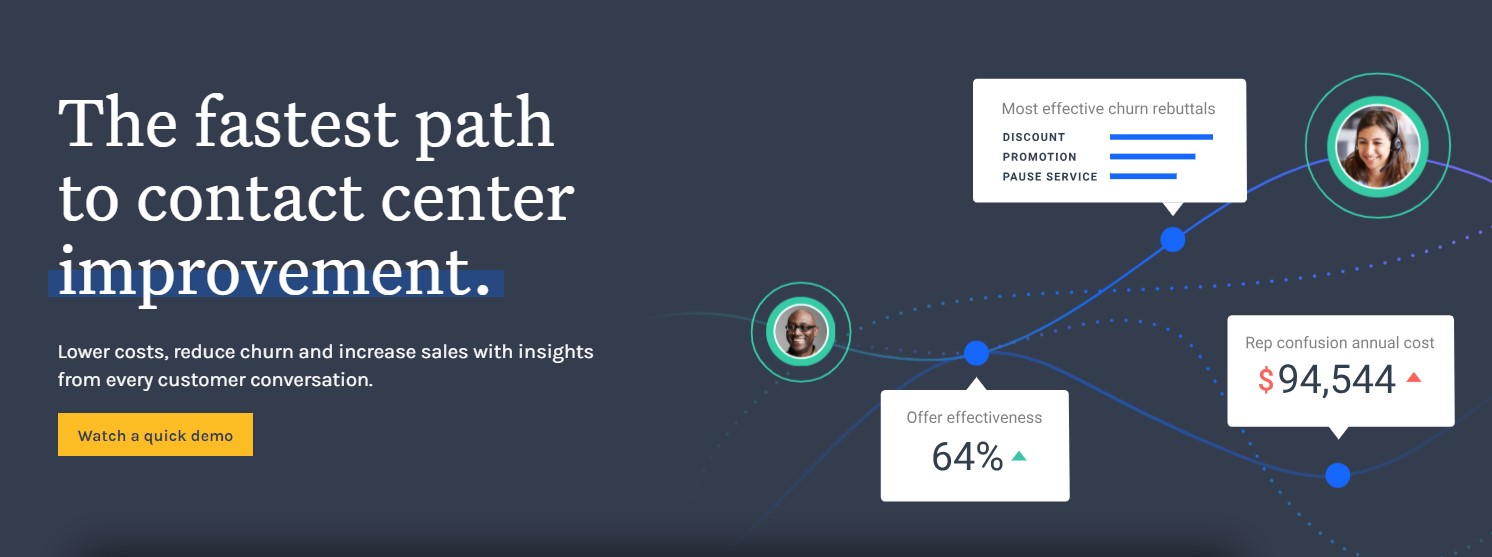
Tethr
Tethr est une plateforme robuste d'intelligence conversationnelle qui offre une gamme de fonctionnalités conçues pour analyser les interactions client et fournir des informations exploitables.
Fonctionnalités clés:
Analyse vocale: Analyse le contenu parlé pour en déduire le sentiment et l'intention du client.
Mesures opérationnelles: Suit les mesures de performance pour aider à optimiser les opérations des centres d'appels.
Visualisation des données: Tethr offre des tableaux de bord complets et des représentations visuelles des données, ce qui facilite la compréhension des tendances, l'identification des problèmes et le suivi des améliorations au fil du temps pour les utilisateurs.
Modèles d'IA personnalisables: Les utilisateurs peuvent adapter les modèles d'IA à des besoins et des scénarios spécifiques, garantissant que les informations générées sont pertinentes et exploitables pour leur contexte commercial particulier.
Avantages: Tethr excelle dans l'extraction de données significatives des conversations client, ce qui facilite la prise de décisions stratégiques.
Inconvénients: La plateforme peut exiger une courbe d'apprentissage importante pour exploiter pleinement ses capacités d'analyse.
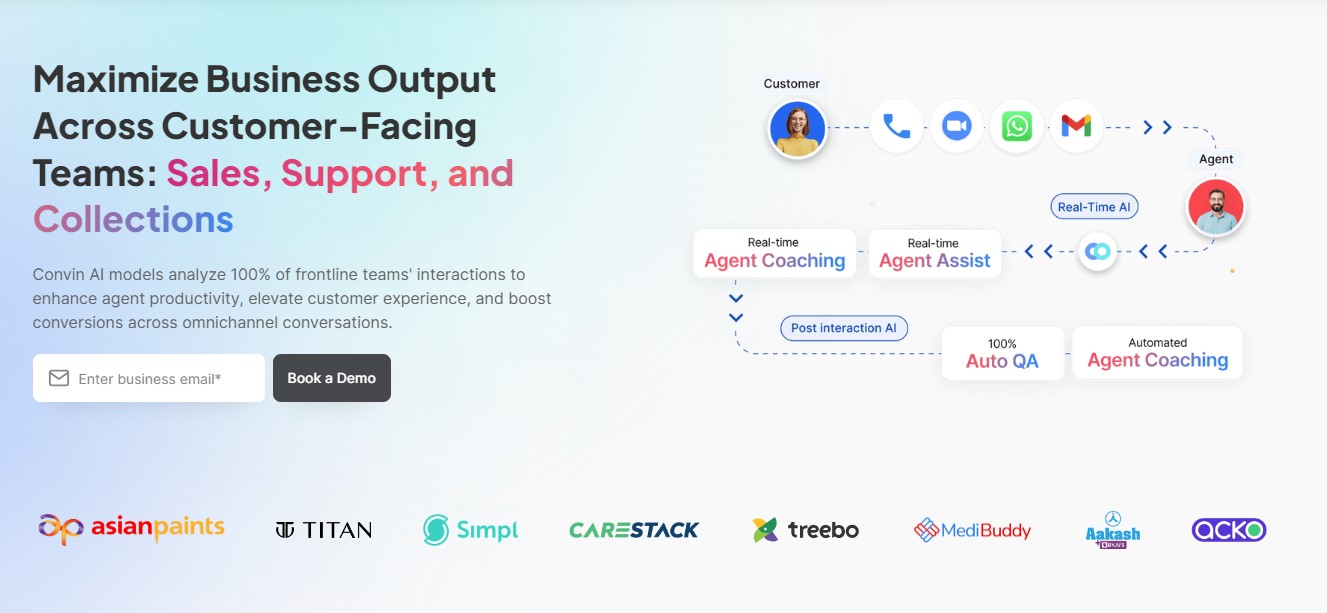
Convin
Convin est un outil d'analyse vocale alimenté par l'IA qui améliore la performance des centres de contact grâce à des capacités complètes d'intelligence conversationnelle.
Fonctionnalités clés:
Analyse des sentiment: Comprendre le ton émotionnel des interactions avec les clients.
Analyse prédictive: Utiliser l'IA pour prédire les résultats des appels, contribuant à adapter les stratégies.
Intégration: S'intègre facilement aux systèmes CRM existants pour des flux de travail optimisés.
Avantages : Convin utilise une IA avancée pour transformer les conversations en informations exploitables, ce qui est excellent pour améliorer l'engagement et les processus de prise de décision.
Inconvénients: Comme pour de nombreux outils d'IA, la précision des informations peut varier, et la configuration initiale peut nécessiter une personnalisation substantielle.
Observe.AI
Observe.AI est une plateforme d'analyse vocale conçue pour améliorer la performance des centres de contact grâce à des analyses avancées et des informations basées sur l'IA.
Fonctionnalités clés:
Informations en temps réel: Offre une analyse en direct pendant les appels pour fournir une rétroaction et un encadrement immédiats.
Assurance qualité: Surveille la conformité et la qualité du service tout au long des interactions avec les clients.
Encadrement des agents et suivi du rendement: Offre des outils pour un encadrement et une rétroaction ciblés, permettant des plans de développement personnalisés pour les agents basés sur des données de rendement réelles.
Créateur de moments intuitif: Permet aux utilisateurs de créer et de mettre en évidence les moments importants dans les interactions avec les clients, qui peuvent être utilisés à des fins de formation et d'amélioration.
Avantages: Reconnu pour son interface intuitive et sa facilité de configuration, ce qui en fait un favori auprès des utilisateurs pour un déploiement rapide et une grande convivialité.
Inconvénients: La tarification personnalisée peut être un obstacle pour les centres d'appels plus petits avec des budgets limités.
Gong
Gong est un outil d'analyse conversationnelle populaire utilisé par les équipes de vente pour optimiser leurs stratégies de vente basées sur les données des interactions avec les clients.
Fonctionnalités clés:
Intelligence des transactions: Identifie les opportunités de vente et les risques potentiels.
Intelligence de marché: Suit les tendances du marché pour aider à aligner les stratégies.
Assistance en temps réel: Offre des conseils pendant les appels en fournissant des points de discussion en temps réel et des conseils tactiques pour aider les représentants commerciaux à gérer efficacement divers scénarios de vente.
Capture de conversations: Enregistre et transcrit automatiquement les appels de vente et les réunions, rendant chaque interaction recherchable et analysable.
Avantages: Excellent pour les équipes axées sur les ventes, car il fournit des informations détaillées sur le comportement des clients et l'efficacité des ventes.
Inconvénients: Principalement conçu pour les environnements de vente, ce qui peut ne pas être aussi utile pour les centres d'appels axés sur le service.
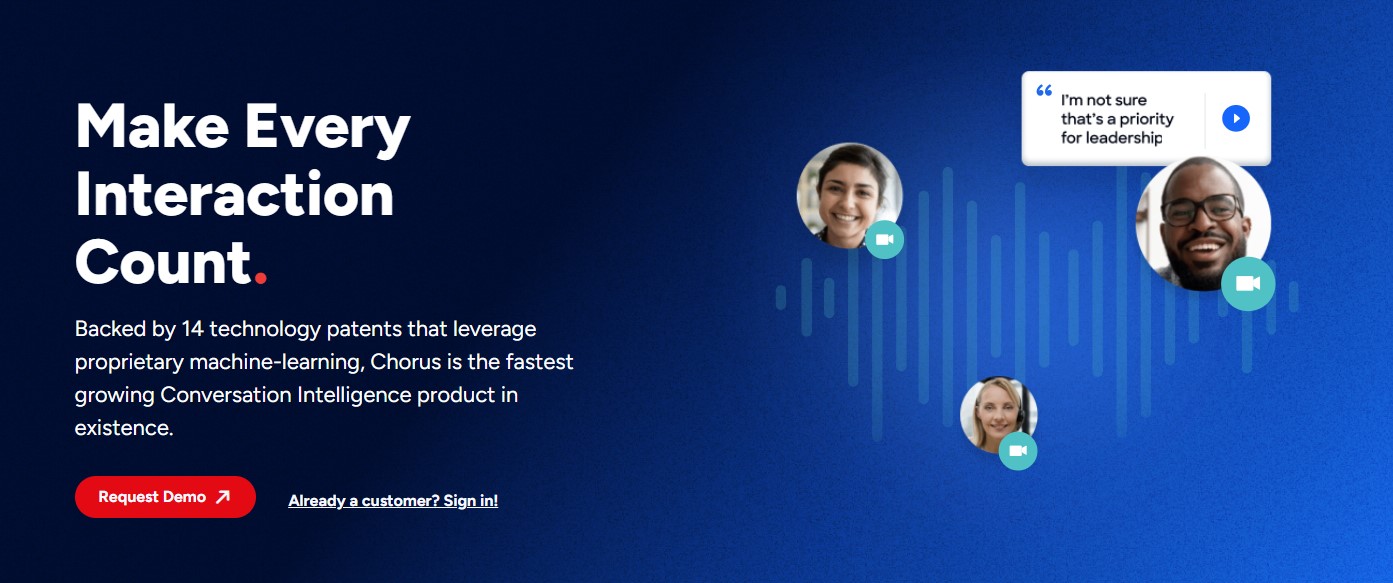
Chorus by ZoomInfo
Un autre outil conçu pour les équipes de vente, Chorus by ZoomInfo aide les équipes de vente axées sur la performance à capturer et à analyser tous les appels, réunions et courriels des clients.
Fonctionnalités clés:
Gestion des relations: Suit les relations avec les clients pour maintenir l'engagement et la satisfaction.
Intelligence connectée: S'intègre à d'autres plateformes pour une vue d'ensemble des interactions avec les clients.
Transcription avancée: L'outil fournit des transcriptions de haute qualité des appels de vente, qui sont recherchables et peuvent être analysées pour en extraire les thèmes clés, les sujets et les informations exploitables.
Avantages: Chorus est particulièrement doué pour identifier les moments clés des conversations qui peuvent mener à des résultats positifs.
Inconvénients: Les utilisateurs ont signalé qu'il peut être coûteux et que l'ensemble des fonctionnalités du plan de base est limité.
Meilleures pratiques pour la mise en œuvre de l'analyse vocale
Le choix d'un outil d'analyse vocale et son déploiement dans votre centre d'appels exigent une planification minutieuse. Voici quelques-unes des meilleures pratiques pour la mise en œuvre de l'analyse vocale dans votre centre d'appels.
Évaluez soigneusement les fournisseurs
Lorsque vous comparez différents fournisseurs de logiciels d'analyse vocale, il y a quelques éléments à prendre en compte:
Précision de la transcription
Évolutivité
Facilité d'utilisation
Rapports et analyses en temps réel
Capacités d'intégration
Vous devriez également rechercher la réputation de chaque fournisseur en lisant les avis et les témoignages de clients. Recherchez des fournisseurs ayant une expertise avérée et un solide historique en matière d'analyse vocale. L'expérience dans votre secteur d'activité peut être particulièrement précieuse, car cela signifie que le fournisseur sera familier avec les défis et les réglementations spécifiques à l'industrie.
Si vous adoptez une approche omnicanal du service client, le choix d'un fournisseur qui offre des solutions pour l'analyse de texte et l'analyse vocale est une considération importante. Le choix d'un outil d'analyse vocale compatible omnicanal peut vous aider à améliorer votre retour sur investissement (ROI) et à vous donner une meilleure visibilité sur le parcours client.
Priorisez l'intégration avec les systèmes existants
Les meilleurs outils d'analyse vocale devraient fonctionner de manière transparente avec la technologie existante de votre centre d'appels. Certains fournisseurs de centres de contact, comme ComputerTalk, offrent des intégrations prêtes à l'emploi avec les outils d'analyse vocale, ce qui élimine le besoin d'investir dans des intégrations personnalisées.
Outre une intégration robuste avec votre centre de contact, les intégrations avec les outils CRM et les logiciels de gestion des effectifs peuvent aider à maximiser la valeur de votre déploiement d'analyse vocale.
Mettez l'accent sur la formation des employés
Les meilleurs outils d'analyse vocale devraient être intuitifs et faciles à utiliser. Cependant, les employés pourraient tout de même avoir besoin de formation pour s'assurer qu'ils peuvent tirer pleinement parti des avantages de la nouvelle technologie. Investissez dans des programmes de formation et d'intégration pour familiariser les agents et les superviseurs avec votre nouvel outil.
N'oubliez pas que certains fournisseurs offriront également l'accès à des ressources de formation pour faciliter l'expérience d'intégration.
Tenez compte des questions de conformité et de confidentialité
Lors de l'enregistrement, de la transcription et de l'analyse des conversations, il est essentiel d'assurer la conformité aux lois et réglementations locales. Les données recueillies par les outils d'analyse vocale peuvent être sensibles et peuvent être soumises à diverses exigences réglementaires. Comprendre les lignes directrices auxquelles vous devez vous conformer et comment vous pouvez protéger vos données est très important.
Assurez-vous de mettre en place des contrôles d'accès rigoureux afin de limiter l'accès aux données sensibles. Si vous n'en avez pas déjà une, vous devriez également mettre en œuvre une stratégie de gouvernance des données pour réduire les risques de conformité. Selon votre stratégie de sécurité des données, il peut également être important de considérer comment et où les données enregistrées et transcrites sont stockées.
Surveillez et optimisez constamment
Une fois mis en œuvre, vous devriez surveiller attentivement la performance de votre nouvel outil d'analyse vocale. Portez attention à la précision de la transcription et à l'impact de vos rapports sur vos objectifs d'expérience client. Suivez les indicateurs d'engagement et de satisfaction client parallèlement à la performance des agents et recueillez les commentaires des utilisateurs pour identifier les domaines à améliorer.
Apporter des ajustements constants est important pour optimiser la valeur de votre outil d'analyse vocale. Expérimentez différentes méthodes, telles que la création de tableaux de bord personnalisés, l'affinage des modèles de reconnaissance vocale et la mise à jour des supports de formation.
Tirer parti des avantages de l'analyse vocale pour les centres d'appels
Les outils d'analyse vocale permettent aux centres d'appels de faire ressortir des tendances et des informations précieuses de chaque conversation client. Ces outils peuvent révolutionner la performance de votre centre d'appels en offrant une rétroaction en temps réel sur les interactions client tout en aidant les dirigeants d'entreprise à élaborer des programmes de formation plus efficaces.
Les outils d'analyse vocale peuvent également améliorer l'expérience client en réduisant les temps de traitement des appels, en permettant des conversations plus personnalisées et en fournissant des informations sur les points de friction.
Avec les bons outils, les centres d'appels peuvent devenir plus agiles et axés sur les données. Découvrez comment vous pouvez tirer parti des avantages de l'analyse vocale dans votre centre d'appels en contactant un représentant de ComputerTalk dès aujourd'hui.
Abonnez-vous à notre infolettre
Merci d'avoir communiqué avec ComputerTalk !
Nous prendrons contact avec vous sous peu. Il y a aussi un bouton de discussion maintenant dans le coin inférieur droit du site Web, si vous souhaitez nous parler immédiatement.
Oups! Une erreur est survenue lors de l'envoi du formulaire.
%20-%20Google%20Ads.png)