iceAI Studio vous donne un contrôle total sur les connaissances de vos agents IA et sur la façon dont ils dirigent les clients, favorisant ainsi des résolutions plus rapides et de meilleures expériences.
De la norme PCI-DSS à la certification SOC 2, le centre de contact ice est bâti sur un cadre de conformité qui saura satisfaire votre équipe de sécurité
Logiciels d'automatisation des centres d'appels: Meilleurs outils pour 2025
Kent Mao
Dernière mise à jour :
April 22, 2025
On dirait que l'automatisation des centres d'appels est partout de nos jours, des chatbots et des agents virtuels aux logiciels d'assurance qualité et de gestion des effectifs.
Ces outils d'automatisation combinent l'intelligence artificielle et d'autres technologies pour optimiser et rationaliser les opérations des centres d'appels. Ils peuvent améliorer le service client, réduire les coûts et accroître l'efficacité en assistant les agents humains et en réduisant les tâches répétitives.
95% des dirigeants de centres d'appels affirment avoir déjà adopté ou prévoir d'adopter la technologie d'automatisation. Et à mesure que la technologie d'automatisation progresse, la demande d'outils d'automatisation continuera de croître.
Pour vous aider à identifier les meilleures solutions pour automatiser votre centre d'appels, nous passerons en revue certains des logiciels les plus impressionnants, en nous concentrant sur les fournisseurs offrant les fonctionnalités les plus avant-gardistes.
Qu'est-ce que l'automatisation des centres d'appels?
L'automatisation des centres d'appels implique l'utilisation de la technologie, en particulier l'intelligence artificielle (IA), pour gérer et rationaliser les opérations de service client dans un centre d'appels. Cette automatisation peut améliorer considérablement l'efficacité de votre centre d'appels en automatisant les tâches routinières et en réduisant la charge de travail des agents humains.
L'automatisation des centres d'appels gagne en popularité aujourd'hui à mesure que les logiciels améliorés par l'IA deviennent plus répandus et accessibles. Les logiciels d'automatisation peuvent être inclus dans votre plateforme de centre d'appels en tant que fonctionnalités intégrées ou être ajoutés ultérieurement via des intégrations personnalisées.
Types de logiciels d'automatisation des centres d'appels
Les logiciels d'automatisation des centres d'appels se présentent sous diverses formes, conçues pour répondre à différents cas d'utilisation et défis. Les types les plus courants comprennent :
Agents conversationnels et vocaux
Les agents conversationnels et les agents vocaux sont des outils alimentés par l'IA capables d'automatiser les interactions avec le service client. Ils peuvent répondre aux questions courantes, diriger les clients vers les FAQ et les guides, et même accomplir certaines tâches comme vérifier le statut d'une commande. Certaines entreprises ont commencé à remplacer leurs systèmes IVR par des agents vocaux capables d'interagir avec les appelants et de simuler une conversation avec un agent humain.
Outils de prévision et de planification
Les logiciels de gestion des effectifs (WFM) exploitent l'IA, les données historiques et les données en temps réel pour aider les dirigeants de centres d'appels à comprendre les tendances des volumes de demandes des clients. En utilisant ces données, Logiciel de GDT peut aider à prévoir la demande et à répartir efficacement les ressources humaines dans l'ensemble de l'entreprise.
Automatisation des flux de travail
Les outils d'automatisation des flux de travail simplifient les tâches traditionnellement manuelles et fastidieuses grâce à une logique basée sur des règles. Par exemple, ils peuvent vous permettre de créer des flux de travail qui téléversent automatiquement les données des clients vers un CRM après un appel. Ils peuvent également automatiser d'autres tâches routinières telles que l'acheminement des appels, la création de billets et la planification des suivis.
Assistance aux agents
Les outils d'assistance aux agents offrent des aperçus en temps réel sur la performance des agents et peuvent fournir un coaching étape par étape ainsi que des conseils sur la meilleure prochaine action au personnel. Ils peuvent également afficher automatiquement des informations sur un tableau de bord d'agent provenant d'autres systèmes, comme votre CRM.
Assurance qualité
Les outils automatisés d'assurance qualité surveillent les problèmes de performance et les métriques dans votre centre d'appels. Ils peuvent identifier instantanément les problèmes et envoyer automatiquement des notifications aux superviseurs. Certains peuvent également générer des fiches d'évaluation pour les agents individuels.
Les meilleurs logiciels d'automatisation pour centres d'appels de 2025
Le meilleur logiciel d'automatisation pour centres d'appels pour votre entreprise variera en fonction de vos objectifs et de vos cas d'utilisation. Les éléments à prendre en compte incluent les besoins de votre entreprise, les capacités d'intégration, la facilité d'utilisation et le coût total.
Si vous souhaitez réellement tirer parti de l'automatisation dans votre centre d'appels, vous pourriez envisager de combiner plusieurs formes de technologie d'automatisation. Par exemple, la combinaison de clavardeurs (chatbots) avec des outils automatisés de gestion des effectifs et des systèmes d'assistance aux agents pourrait véritablement transformer votre centre d'appels.
Voici un aperçu des meilleures solutions d'automatisation de pointe pour chacune des catégories mentionnées ci-dessus.
Clavardeurs (chatbots) et assistants vocaux (voicebots)
Les clavardeurs se sont généralisés dans les centres d'appels, car les clients exigent des solutions de libre-service plus pratiques et intuitives. 76% des entreprises utilisent déjà des clavardeurs, et beaucoup améliorent leur technologie avec les dernières innovations en matière d'IA générative.
Voici notre sélection des meilleurs fournisseurs de chatbots et de voicebots en 2025 :
Ada
Ada est une plateforme de service client alimentée par l'IA, spécialisée dans les chatbots de haute qualité propulsés par le moteur de raisonnement propriétaire de l'entreprise. Les robots d'Ada peuvent interagir avec les clients sur divers canaux, des sites web aux SMS et par téléphone, et ils intègrent même des capacités d'apprentissage automatique, afin que vous puissiez optimiser la performance de chaque robot au fil du temps.
Fonctionnalités:
Moteur propriétaire de compréhension du langage naturel (NLU)
Plateforme glisser-déposer pour la création de robots scriptés
Analyses et rapports sur la performance des chatbots
Solutions de personnalisation de chatbots (comme la possibilité d'intégrer vos données)
Prise en charge des canaux vocaux, numériques et de courriel
Idéal pour : Les entreprises cherchant à créer rapidement des robots et assistants performants, y compris des voicebots alimentés par l'IA pour remplacer les systèmes IVR.
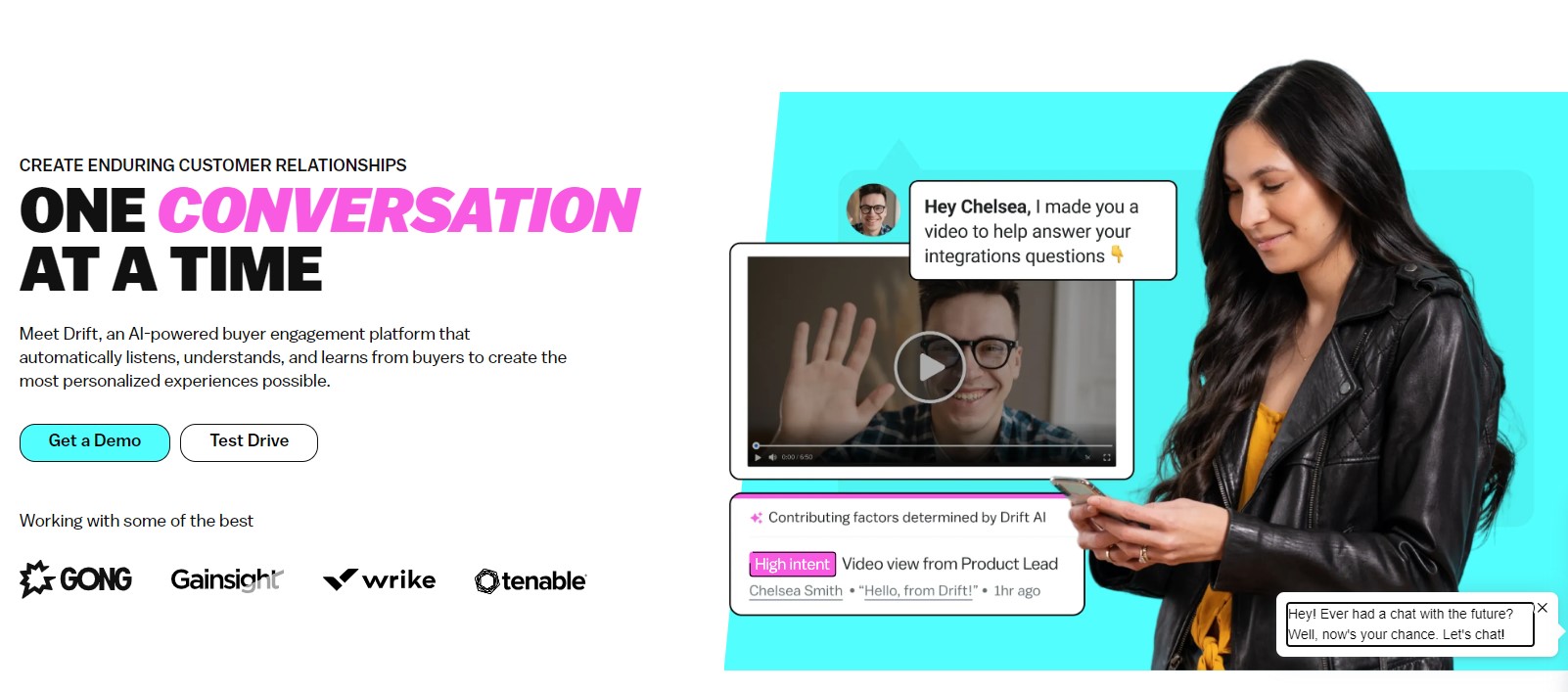
Drift
La plateforme de Drift, alimentée par l'IA, plateforme d'engagement des acheteurs est propulsée par une technologie d'IA conversationnelle de pointe. Avec la plateforme Drift, les entreprises peuvent créer des robots qui détectent l'intention du client, automatisent les processus (comme la réservation de réunions) et même fournissent des recommandations personnalisées aux clients.
Fonctionnalités:
Intégration de clavardage en direct et de chatbots
Développement de chatbots personnalisés
Intelligence conversationnelle pour tous les robots
Capacités de routage flexibles
Tests A/B
Segmentation de l'audience
Idéal pour: Concevoir des agents conversationnels pour les équipes de marketing et de vente qui guident automatiquement les clients tout au long du cycle d'achat, augmentent les conversions et stimulent les revenus.
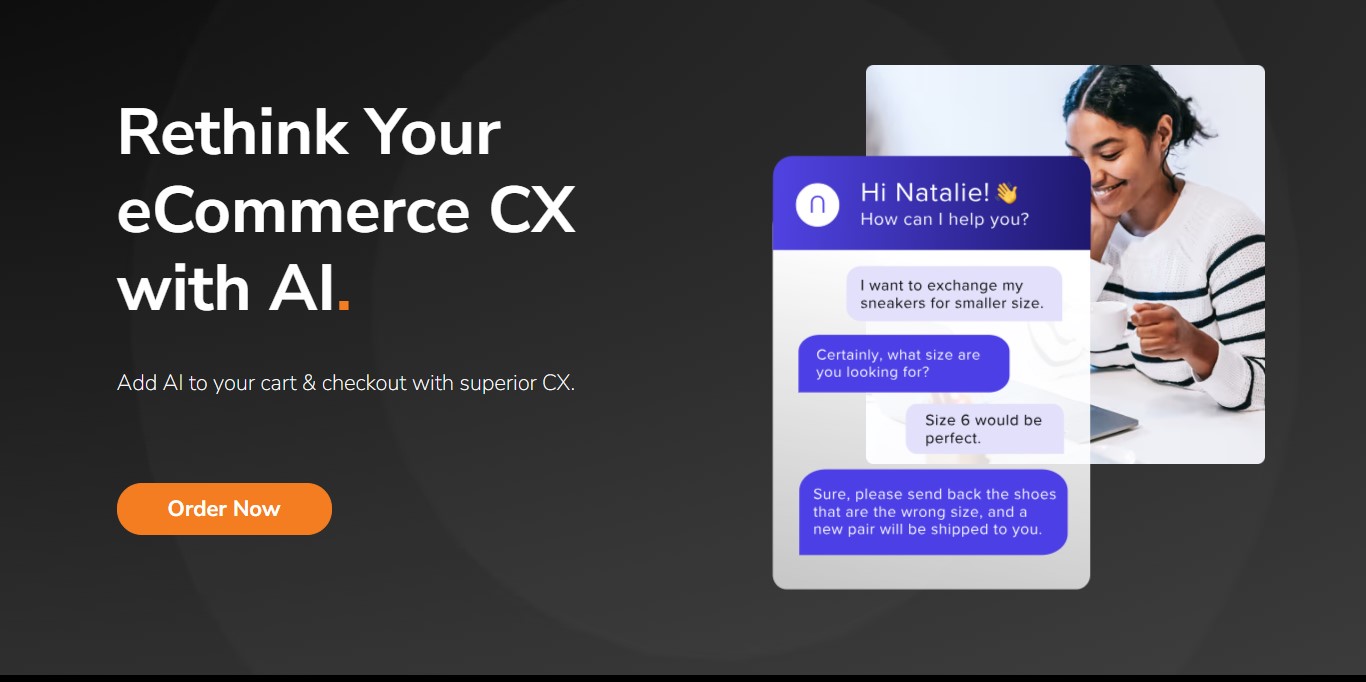
Netomi
Utilisé par des entreprises de premier plan comme Warner Bros et WestJet, Netomi est une plateforme d'IA qui permet aux entreprises de tirer parti des dernières innovations en matière d'IA générative. Les entreprises peuvent créer leurs propres expériences d'IA générative pour offrir un service client proactif et réactif sur une variété de canaux, des médias sociaux aux SMS, en passant par la voix et le courriel.
Fonctionnalités:
Intelligence omnicanal
Modèles d'IA générative axés sur les objectifs
Accès fédéré aux connaissances par l'IA
Architecture de données axée sur la sécurité
Prise en charge du service proactif, prédictif et préventif
Intégrations avec une gamme d'outils CX
Idéal pour: Concevoir des agents conversationnels pour remplacer les grandes équipes de service client dans les secteurs du commerce de détail, du divertissement, du voyage et de l'hôtellerie.
Outils de gestion et d'optimisation des effectifs
Les outils de gestion des effectifs (WFM) et d'optimisation des effectifs (WFO) sont excellents pour automatiser les processus de prévision et de planification au sein d'un centre d'appels. Les meilleurs outils tirent parti des dernières technologies et algorithmes d'IA et peuvent s'intégrer parfaitement à votre logiciel de centre d'appels. Nos outils préférés pour 2025 sont:
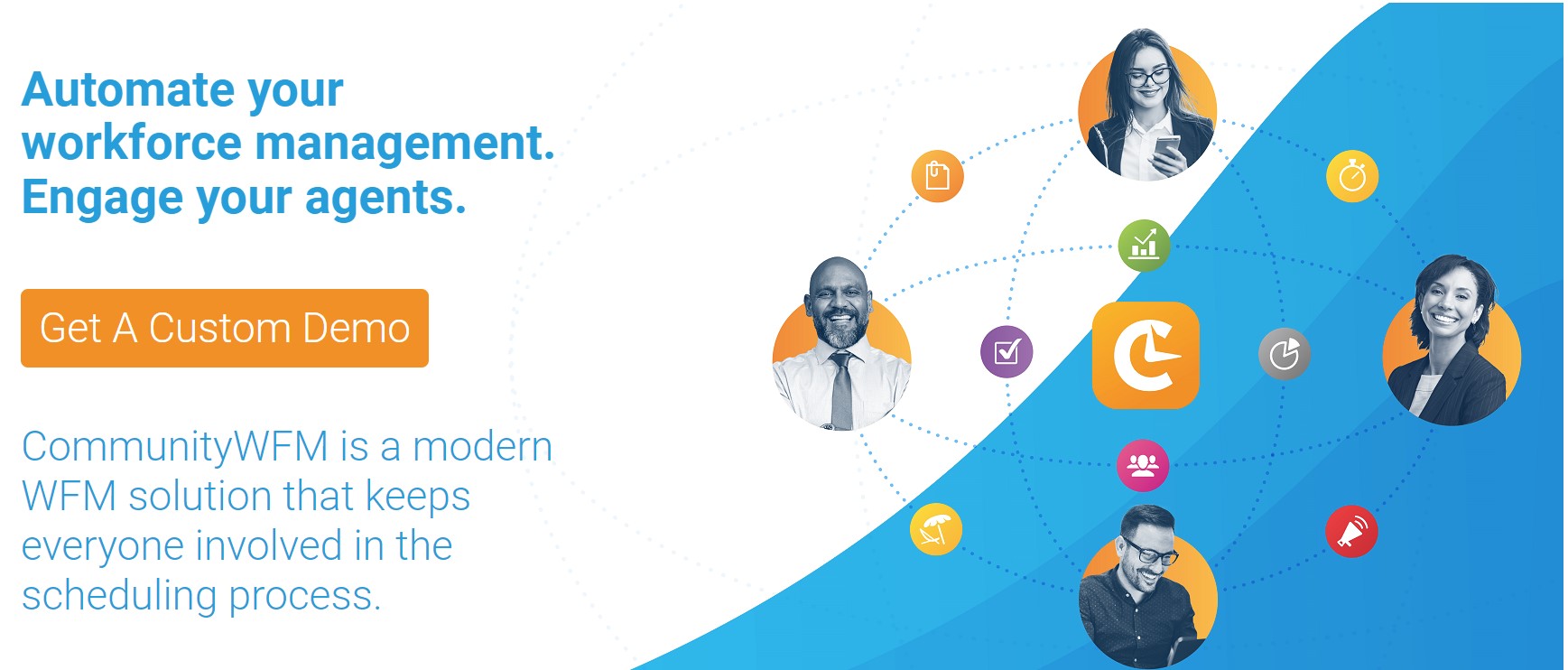
CommunityWFM
CommunityWFM est une plateforme infonuagique qui peut aider les entreprises à économiser du temps et de l'argent tout en stimulant l'engagement des employés. La solution simplifie l'automatisation des tâches essentielles comme la prévision des volumes d'appels, la gestion des changements d'horaire intrajournaliers et la collecte des données de performance.
Fonctionnalités:
Outils complets de prévision et de planification
Portail et application intuitifs pour agents
Collecte de données et rapports automatisés
Suivi des présences
Plans d'ajustement d'horaire automatisés
Idéal pour: Rationaliser et optimiser la gestion intrajournalière pour les centres d'appels de toutes tailles.
Verint
Verint Le logiciel de gestion des effectifs de Verint offre aux entreprises une vue d'ensemble complète de leurs ressources, afin qu'elles puissent prendre des décisions éclairées concernant les horaires et les flux de travail. Il est doté de fonctionnalités d'IA, telles qu'un robot de prévision de la charge de travail qui peut fournir des suggestions d'optimisation des horaires aux gestionnaires de centres d'appels, réduisant ainsi les coûts tout en améliorant la performance. Verint a les scores de satisfaction client les plus élevés de l'industrie et est utilisé par de grandes entreprises, notamment Google et Instacart.
Fonctionnalités:
Prévision et planification propulsées par l'IA
Fonctionnalités de ludification pour l'engagement des employés
Robot d'entrevue intelligent
Canaux de scores de performance personnalisés
Capacités de planification omnicanal
Idéal pour: Les grandes entreprises à la recherche d'une solution de gestion des effectifs dotée de robots intelligents et d'analyses approfondies.
Alvaria
La solution d'Alvaria de gestion des effectifs aide les entreprises à rationaliser la gestion des horaires et à améliorer l'engagement des employés. Grâce à la plateforme complète, les entreprises peuvent créer automatiquement des horaires optimisés, surveiller les taux de performance dans l'ensemble de l'entreprise et même motiver leurs équipes avec des classements et des incitatifs.
Fonctionnalités:
Prévisions basées sur l'IA
Gestion complète des horaires
Fonctionnalités de ludification pour l'engagement des employés
Analyses basées sur l'IA
Suivi des indicateurs de productivité
Analyse de scénarios (« et si ») pour différents modèles de dotation
Idéal pour: Combiner l'optimisation intelligente des horaires avec des outils pour l'engagement des employés, tels que les classements et les incitatifs.
Automatisation des flux de travail
Les outils d'automatisation des flux de travail permettent aux agents d'accomplir automatiquement les tâches répétitives. Ces outils sont généralement des fonctionnalités intégrées à votre logiciel de centre d'appels. Ils simplifient l'optimisation de tout, des stratégies de routage et de mise en file d'attente à la collecte et à la gestion des données. En automatisant ces flux de travail, les centres d'appels peuvent réduire les erreurs humaines, augmenter l'efficacité opérationnelle et libérer les agents afin qu'ils se concentrent sur des interactions plus complexes avec les clients.
Voici notre sélection des meilleures solutions de centre d'appels dotées d'outils d'automatisation des flux de travail intégrés:
ComputerTalk
Le ComputerTalk iceWorkflow Un concepteur est un outil puissant qui aide les entreprises à cartographier et à optimiser les parcours client sur divers canaux. Grâce à lui, les organisations peuvent combiner diverses stratégies de routage avec l'automatisation en libre-service, la mise en file d'attente intelligente et plus encore. De plus, l'interface graphique intuitive simplifie la visualisation de chaque flux de travail sans nécessiter de connaissances en codage.
Fonctionnalités:
Puissant générateur visuel par glisser-déposer
Personnalisation complète pour tous les flux d'interaction
Accès aux outils CRM et aux fenêtres contextuelles
Flux multimédia archivable pour l'assurance qualité
Options complètes de mise en file d'attente et de routage
Idéal pour : Créer des flux de travail automatisés puissants sans connaissances en codage ou en conception.
Talkdesk
Fourni avec sa solution CCaaS alimentée par l'IA, de Talkdesk le constructeur de flux de travail simplifie l'optimisation de la productivité. Vous pouvez créer des flux de travail qui téléchargent automatiquement les enregistrements et les données vers votre CRM, créent et attribuent des billets à des membres d'équipe spécifiques, et même fournissent des informations cruciales aux membres de l'équipe. De plus, grâce à l'IA générative, vous pouvez concevoir des flux de travail en quelques secondes à l'aide de simples invites.
Fonctionnalités:
Interface simple par glisser-déposer
Intégrations avec les plateformes CRM
Notifications et alertes personnalisables
Création et gestion automatisées des billets
Liens vers des outils Talkdesk comme Talkdesk Feedback et Autopilot
Prise en charge de l'IA générative
Idéal pour: Simplifier le processus de création de flux de travail avec l'IA générative.
Five9
La plateforme d'automatisation intelligente des flux de travail de Five9 offre aux entreprises un environnement à code bas/sans code où elles peuvent connecter les données clients à travers le nuage. Vous pouvez concevoir une gamme de flux de travail automatisés différents pour tout, de la prospection commerciale aux notifications proactives de service client. De plus, la plateforme de centre de contact de Five9 s'intègre à une multitude d'autres plateformes de communication et de CRM.
Fonctionnalités:
Plus de 50 intégrations avec des outils d'affaires
Attribution et acheminement intelligents des compétences des agents
Orchestration omnicanal
Générateur de flux de travail par glisser-déposer
Notifications et alertes personnalisables
Idéal pour: Faire le pont entre vos divers outils de collaboration, plateformes CRM et autres sources de données de centre d'appels.
Outils d'assistance aux agents
Les outils d'assistance aux agents sont conçus pour aider les agents à gérer les interactions clients de manière plus efficace et efficiente. Ces outils offrent une assistance en temps réel lors des appels ou des clavardages avec les clients en proposant des informations pertinentes, des invites et des fonctions automatisées. Cela peut inclure l'accès aux données clients, la suggestion de réponses basées sur des interactions passées, le guidage de l'agent à travers des processus complexes et l'automatisation des tâches routinières.
Voici quelques-uns de nos outils d'assistance aux agents préférés:
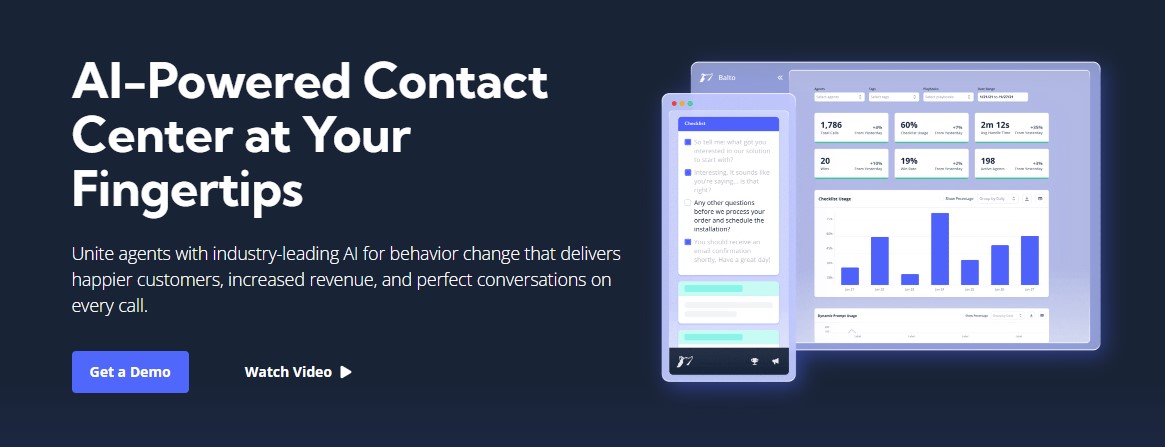
Balto
Balto améliore la productivité et la performance des centres d'appels grâce à des assistants IA qui guident les employés lors des conversations avec les clients. La plateforme surveille la qualité de chaque interaction et utilise des données historiques et en temps réel pour offrir au personnel des conseils et un encadrement en temps réel. Il y a même une fonctionnalité d'IA générative intégrée, permettant aux employés de poser des questions à Balto et d'accéder à des réponses créatives en quelques secondes.
Fonctionnalités:
Agent conversationnel d'IA générative
Capacités de prise de notes automatique
Surveillance constante de la qualité
Suggestions en temps réel et conseils sur la meilleure prochaine action
Flux de coaching et de formation personnalisables
Copilote d'assurance qualité
Idéal pour: Combiner l'assurance qualité automatisée avec le coaching et les conseils basés sur l'IA pour les équipes.
CallMiner
Propulsé par les dernières avancées en intelligence artificielle et en apprentissage automatique, CallMiner offre aux entreprises une variété d'outils d'orientation pour les agents sous la forme de la plateforme Eureka. La plateforme peut analyser automatiquement des centaines de conversations sur différents canaux, découvrir la cause profonde de certains problèmes et encadrer les membres du personnel avec des commentaires personnalisés basés sur les données.
Fonctionnalités:
Analyse intelligente des conversations omnicanales
Coaching en temps réel, notation automatisée et rétroaction
Conseils sur la meilleure prochaine action basés sur l'IA
Rapports de performance interactifs
Masquage instantané des données sensibles
Enregistrement des appels et de l'écran
Idéal pour: Aider les agents à analyser leur rendement en temps réel, à suivre les indicateurs clés et à accéder à des conseils sur la meilleure prochaine action.
ScoreBuddy
ScoreBuddy exploite l'IA générative, l'apprentissage automatique et le traitement du langage naturel pour doter les agents d'une notation de performance, d'une synthèse et d'un encadrement automatisés. La solution peut tirer des informations de centaines de conversations pour aider à identifier des moyens d'améliorer de manière proactive l'expérience client. De plus, les entreprises peuvent utiliser la plateforme pour créer des flux de travail d'encadrement complets, personnalisés aux besoins de chaque agent.
Fonctionnalités:
Création de parcours de formation personnalisés
Analyse de conversation de bout en bout
Surveillance et notation de la qualité en temps réel
Informations de veille stratégique
Assistant d'agent IA générative
Idéal pour: Donner aux employés l'accès à une gamme d'outils, allant d'un assistant alimenté par l'IA à un système d'encadrement automatisé.
Assurance qualité
L'assurance qualité est essentielle au bon fonctionnement d'un centre d'appels, mais la notation manuelle des interactions et le suivi du rendement des employés peuvent être chronophages et sujets aux erreurs humaines. Les outils d'assurance qualité automatisés combinent la surveillance en temps réel avec des alertes personnalisables pour garantir que les expériences offertes par votre centre d'appels correspondent constamment aux attentes des clients.
Voici nos choix pour les meilleurs outils d'automatisation de l'assurance qualité en 2025:
Observe.AI
Promettant des informations approfondies sur 100 % de vos interactions client, Observe.AI donne aux entreprises les outils dont elles ont besoin pour maximiser la performance de leur équipe. La solution d'AQ automatique de l'entreprise évalue rapidement le rendement des agents en fonction de vos paramètres prédéfinis et alerte les superviseurs sur les opportunités d'encadrement et de développement. Observe.AI s'intègre à une vaste gamme de plateformes CCaaS, CRM et de veille stratégique.
Fonctionnalités:
Tableaux de bord personnalisables pour vous aider à suivre les bonnes métriques
Règles d'automatisation sur mesure pour les alertes aux superviseurs
Aperçus en temps réel des opportunités de coaching
Recommandations et suggestions basées sur l'IA
Fonctionnalité omnicanal complète
Idéal pour: Identifier les meilleures opportunités de coaching pour améliorer la performance de votre équipe.
Klaus
La Klaus plateforme de gestion de la qualité combine une surveillance et des rapports complets pour les interactions omnicanales avec des commentaires et des analyses à 360 degrés. Klaus vous aide à combiner les évaluations de qualité internes avec les commentaires des clients pour obtenir une image complète de la performance des agents. Elle offre également des outils d'IA qui peuvent surveiller les tendances des conversations et identifier les opportunités de développement d'équipe. Vous pouvez même créer des tableaux de bord personnalisés qui reflètent vos besoins commerciaux et générer des rapports visuels très détaillés.
Fonctionnalités:
Surveillance complète de la qualité sur tous les canaux
Création de sondages CSAT personnalisés
Analyse des sentiments et des intentions
Tableaux de bord personnalisables
Aperçus instantanés des opportunités de coaching
Fonctionnalités de rapports détaillés
Idéal pour: Des analyses approfondies de la performance individuelle de chaque employé et des tendances qui influencent la croissance de votre centre d'appels.
Convin
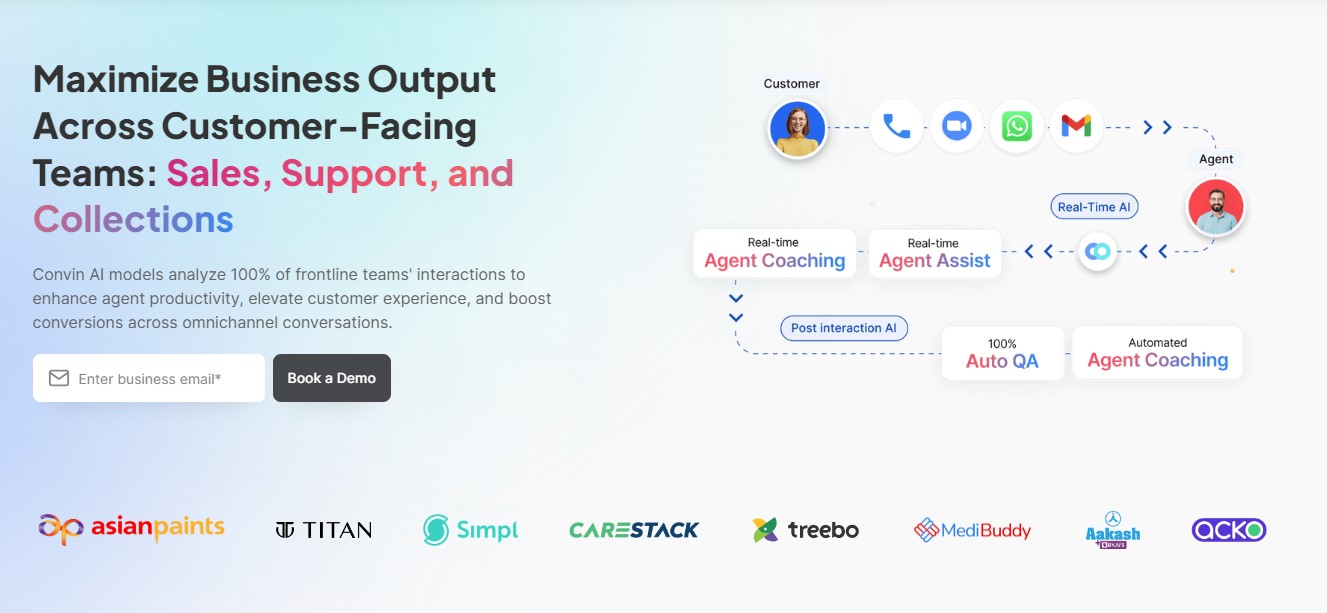
Convin permet aux centres d'appels d'automatiser la gestion de la qualité grâce à des outils basés sur l'IA qui évaluent et notent les interactions sur tous les canaux. La plateforme combine des capacités d'enregistrement avec des outils de création de sondages, la capture des commentaires des clients et des rapports personnalisés. Elle offre également des outils pour l'analyse des causes profondes et le coaching d'agents en temps réel.
Fonctionnalités:
Capture complète de 100 % des appels
Formulaires d'évaluation des appels personnalisés
Rétroaction et recommandations instantanées aux agents
Génération automatisée de rapports
Intégrations avec des outils de collaboration et des CRM
Surveillance des KPI et des métriques en temps réel
Idéal pour: Aligner les analyses des KPI des centres d'appels avec les commentaires qualitatifs recueillis à partir des sondages clients.
Choisir les meilleurs outils d'automatisation pour votre centre d'appels
Grâce aux avancées de l'IA, les outils d'automatisation pour les centres d'appels évoluent rapidement et il existe aujourd'hui de nombreux excellents outils parmi lesquels choisir.
Les outils d'IA, tels que les agents conversationnels (chatbots) et les assistants virtuels intelligents, traitent les demandes de routine avec rapidité et précision, libérant ainsi les agents humains pour s'attaquer à des problèmes plus complexes. L'IA peut également alimenter l'analyse prédictive, aidant les centres d'appels à anticiper les besoins des clients et à optimiser la dotation en personnel. D'autres outils d'automatisation, tels que l'assistance aux agents et les plateformes d'assurance qualité, offrent encore plus d'avantages lorsqu'ils sont déployés dans les centres d'appels.
Lors du choix d'un outil d'automatisation, il est important d'examiner les fonctionnalités, les avis et les capacités d'intégration. Choisissez-en un qui se connectera de manière transparente à votre logiciel de centre d'appels et qui sera facile à utiliser pour les agents.
Si vous recherchez une solution de centre d'appels avec des outils d'automatisation intégrés, planifiez une démo gratuite de ComputerTalk en cliquant ici.
Abonnez-vous à notre infolettre
Merci d'avoir communiqué avec ComputerTalk !
Nous prendrons contact avec vous sous peu. Il y a aussi un bouton de discussion maintenant dans le coin inférieur droit du site Web, si vous souhaitez nous parler immédiatement.
Oups! Une erreur est survenue lors de l'envoi du formulaire.
%20-%20Google%20Ads.png)