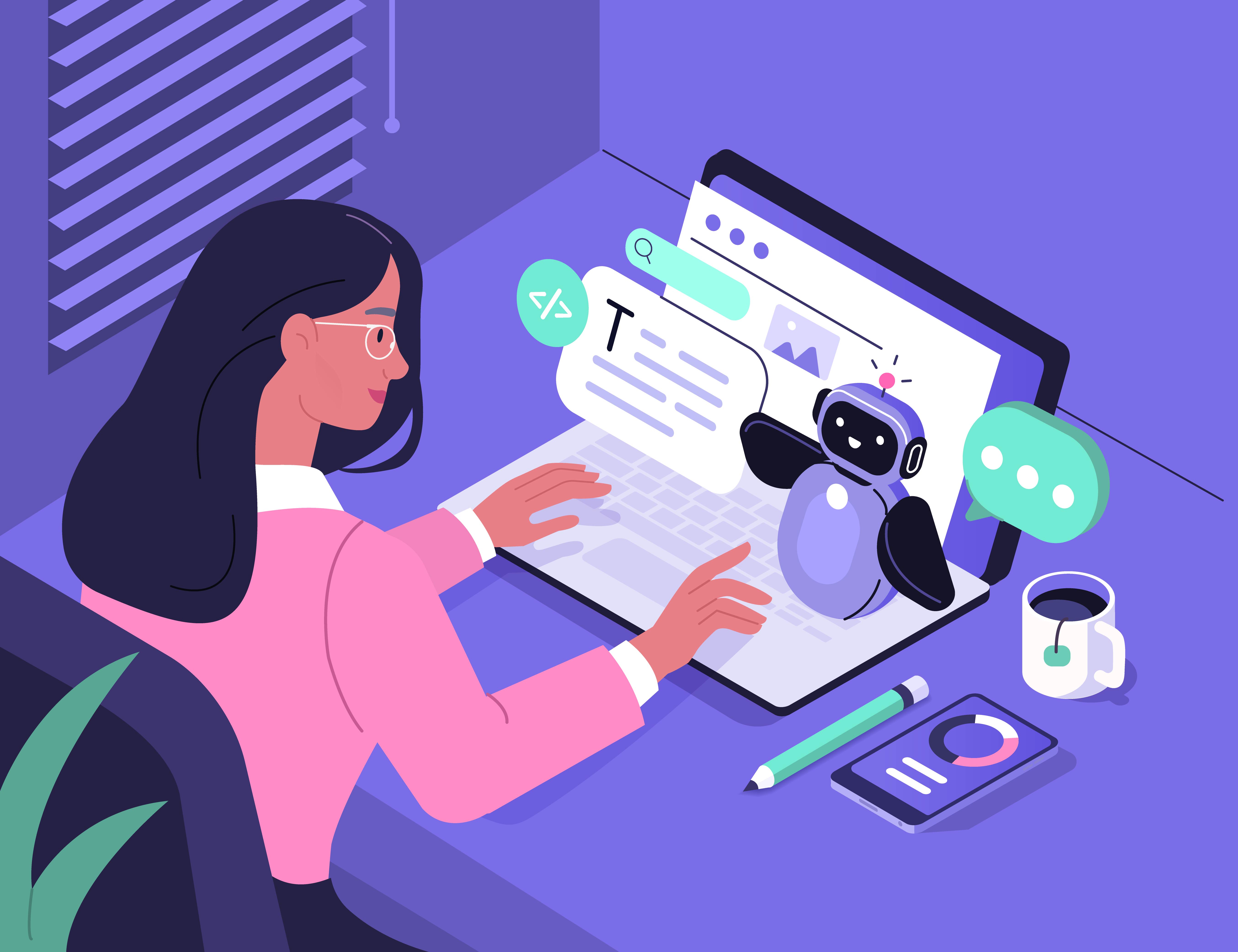
Un chatbot peut sembler simple en apparence. Une petite bulle de texte sur votre site web, une fenêtre contextuelle rapide dans votre application mobile. De l'extérieur, on dirait quelque chose que l'on peut glisser dans sa pile technologique et activer. Mais le développement réel d'un chatbot est une tout autre histoire.
Si votre bot doit faire quelque chose d'utile, comme rechercher un dossier de facturation, envoyer un billet à la bonne équipe ou expliquer une politique complexe, il faut plus qu'une interface épurée. Vous avez besoin de données solides, de systèmes fiables en arrière-plan et d'une logique qui a du sens. Vous avez également besoin de personnes qui savent comment prendre les vraies questions des clients et les transformer en quelque chose que le système peut comprendre.
Apprendre à former et à construire un chatbot qui produit des résultats concrets de manière constante, c'est bien plus que simplement installer un outil. Il s'agit d'enseigner à un système ce que votre entreprise sait, comment vos clients s'expriment et quand faire intervenir un humain.
Selon un rapport de Tidio, plus de 62 % des clients déclarent préférer utiliser un chatbot plutôt que d'attendre en ligne un agent en direct, mais seulement si le bot peut réellement les aider. Un chatbot défectueux ou déroutant ne fait pas qu'agacer les gens. Il nuit à la confiance. Alors, comment les leaders de l'expérience client conçoivent-ils un bot qui fonctionne vraiment?
Aperçu : Ce qu'il faut pour créer un chatbot
Construire un chatbot qui fonctionne signifie connecter plusieurs éléments technologiques et s'assurer qu'ils communiquent réellement. Si une partie est défaillante, les choses commencent à s'effondrer. Les bots peuvent halluciner, interrompre des conversations, ne pas escalader ou donner de mauvaises informations aux clients.
Voici ce dont vous avez réellement besoin :
- Une base de connaissances propre et structurée
- Accès aux systèmes dorsaux comme votre CRM, les journaux de support ou le catalogue de produits
- Une couche de traitement du langage naturel (TLN) qui peut interpréter ce que les gens disent
- Une logique qui sait quand donner une réponse, quand demander plus d'informations et quand transférer
- Une façon de former et de reformer votre bot à mesure que votre entreprise évolue
Les outils que vous utilisez dépendent de votre équipe et de votre configuration. Certains sont simples à prendre en main. D'autres nécessitent une logique personnalisée, quelques intégrations et des personnes qui maîtrisent les API. Le plus difficile n'est pas le lancement. Le plus difficile est d'aider le bot à apprendre à partir de données réelles, à comprendre ce que les gens demandent et à répondre sans se bloquer.
Bases de connaissances : Le fondement d'un chatbot
Demandez à la plupart des leaders technologiques par où commencer le développement d'un agent conversationnel et ils vous diront la même chose : commencez par la base de connaissances. Peu importe à quel point l'interface d'un agent conversationnel est impressionnante ou à quel point il traite efficacement les entrées en langage naturel s'il n'a pas d'informations précises et claires à exploiter.
Qu'est-ce qui constitue une base de connaissances?
Lorsque les gens entendent « base de connaissances », ils imaginent généralement une page de FAQ ou un article explicatif. C'en est une partie. Mais pour le développement d'agents conversationnels, la définition est plus large.
Une base de connaissances pour votre agent conversationnel de centre de contact pourrait inclure :
- Documentation de support interne
- Historiques de billets et notes de résolution
- Politiques de service ou de garantie
- Manuels de formation
- Fiches techniques de produits
- Modèles de courriels ou macros
- Transcriptions d'agents en direct
Tout ce que votre équipe utilise pour répondre à une question, si c'est précis et bien rédigé, peut alimenter un agent conversationnel.
Le problème, c'est que ce genre d'informations est souvent éparpillé. Certaines peuvent se trouver dans votre système de service d'assistance. D'autres pourraient être cachées dans des fichiers PDF ou des lecteurs partagés. Certaines pourraient n'exister que dans l'esprit de votre représentant le plus expérimenté. Si vous réfléchissez sérieusement à la manière de former un agent conversationnel, voici la première tâche : rassembler ce qui est pertinent et s'assurer que l'agent peut le trouver.
Structuré ou non structuré : Pourquoi le format est important
Les robots sont plus efficaces avec des règles. Les données structurées, comme les tableaux, les formulaires étiquetés ou les documents riches en métadonnées, leur sont donc plus faciles à comprendre et à utiliser. C'est clair, prévisible et rapide à rechercher.
Les données non structurées sont plus désordonnées. Elles peuvent inclure des paragraphes de texte dans un long manuel ou des notes de soutien à la clientèle sans formatage. Les robots peuvent essayer de les interpréter, mais vous augmentez les risques d'erreur.
- Structuré : « Produit X – Garantie = 2 ans à compter de la date d'achat. »
- Non structuré : « Si le client a acheté le produit X et que cela fait moins de 24 mois, il est probablement encore sous garantie. À moins qu'il n'ait enfreint les conditions. »
Lequel voulez-vous que votre agent conversationnel utilise pour apprendre?
Un agent conversationnel n'invente pas (ou ne devrait pas inventer) de faits. Il reflète la qualité des données sur lesquelles il a été entraîné. Si votre robot tire ses informations d'articles obsolètes, de politiques incohérentes ou de flux de travail confus, vous obtiendrez des réponses qui ne seront ni utiles ni précises.
Copilot de Microsoft le fait bien. Il est entraîné sur des données en direct provenant d'endroits comme SharePoint, Teams et OneDrive, ce qui signifie qu'il est basé sur les mêmes sources auxquelles votre équipe fait déjà confiance.
Le travail que vous investissez dans votre base de connaissances, avant même de toucher à un seul outil d'agent conversationnel, fait toute la différence entre un robot utile et un autre qui fait tourner vos clients en rond.
Données propres ou impures : Pourquoi c'est important
Avant d'approfondir la façon d'entraîner un agent conversationnel, nous devons parler de l'hygiène des données. C'est souvent l'élément de la création d'un agent conversationnel qui détermine le succès ou l'échec. Vous pouvez créer l'interface la plus épurée au monde, mais si votre robot apprend à partir d'informations négligées, obsolètes ou incohérentes, il va échouer sur les bases.
Qu'est-ce qui constitue des données « propres »?
Les données propres sont structurées, correctement étiquetées et rédigées de manière logique. Cela ne signifie pas qu'elles doivent être formelles; elles doivent simplement être cohérentes. Voici à quoi ressemblent généralement les données propres :
- Étiquetées et catégorisées: pour que le robot sache ce qu'il regarde
- Mises à jour régulièrement: pas de politiques expirées ou d'anciens flux de travail
- Exemptes de bruit: c'est-à-dire pas de fautes de frappe, de formatage brisé ou d'abréviations
- Rédigées en langage clair: évitez le jargon, à moins que vos clients ne l'utilisent aussi
Supposons que vous entraînez un robot conversationnel à répondre à des questions de facturation. Si un document mentionne « frais mensuels », un autre « coût d'abonnement » et un troisième « total de la facture », le robot pourrait ne pas comprendre que ces termes signifient la même chose. Cette déconnexion entraîne de la confusion, car les données d'entraînement sont dispersées.
Que se passe-t-il avec des données non épurées?
De mauvaises données mènent à de mauvaises prédictions. Le robot sera confus, donnera des réponses vagues ou sautera des étapes importantes. Il pourrait même « halluciner », c'est-à-dire inventer quelque chose qui semble plausible, mais qui n'est pas vrai.
Voici un exemple de données non épurées :
« compte client expire dans 30 si impayé voir politique #32 re: période de grâce avt coupure. »
Ce type d'information peut être reconnaissable pour un employé humain à l'interne, compte tenu de son expérience et de sa familiarité avec la réception de ce genre de données dans des contextes similaires. Pour un robot? C'est un fouillis. Les modèles d'IA ont besoin d'entrées épurées pour fournir des sorties utiles, comme :
« Si une police demeure impayée pendant trente jours, fermez le compte. »
L'épuration des données n'est pas une tâche unique
L'une des plus grandes erreurs dans le développement de robots conversationnels est de croire que la préparation des données est une étape de lancement. Ce n'est pas le cas. C'est une habitude d'entretien. Les questions des clients évoluent. Les politiques changent. Les données d'entraînement de votre robot doivent en tenir compte. Les équipes qui révisent leurs ensembles de données mensuellement (ou hebdomadairement) ont tendance à observer une meilleure performance au fil du temps. Cela signifie moins de réponses étranges, une meilleure couverture des cas limites et moins d'escalades vers vos agents en direct.
IBM affirme que les organisations dotées de données épurées et bien gérées peuvent prendre des décisions plus fiables basées sur les données. De même, les robots dotés de données épurées et cohérentes peuvent prendre des décisions plus efficaces sur la façon de soutenir un client ou de résoudre un problème.
Rendez les entrées claires. Faites en sorte que le langage corresponde à la façon dont les clients s'expriment. Maintenez les documents à jour. Votre robot et vos clients vous en remercieront.
Systèmes dorsaux : là où le robot acquiert son intelligence
Une fois que votre robot conversationnel a accès à des connaissances épurées et structurées, la question suivante est : peut-il réellement en faire quelque chose d'utile?
C'est là qu'interviennent les systèmes dorsaux. Si la base de connaissances est la mémoire du robot, votre système dorsal est le système nerveux. Il connecte le robot aux données en temps réel, aux règles commerciales et à l'historique des transactions, tout ce dont il a besoin pour aller au-delà des réponses génériques. Dans le cas de l'IA agentique, vos systèmes dorsaux sont également ce qui permet aux agents d'agir, comme acheminer un billet de soutien ou traiter un remboursement.
De quoi parlons-nous ici?
Nous parlons des systèmes sur lesquels votre entreprise s'appuie déjà :
- Plateformes CRM (comme Salesforce ou Dynamics)
- Logiciels de centre d'assistance (où sont gérés les billets et les résolutions)
- Outils de gestion des commandes
- Bases de données contenant des informations sur les clients ou les produits
- Portails de connaissances, bibliothèques SharePoint ou wikis internes
Pour qu'un agent conversationnel soit plus qu'une simple boîte de recherche avec un visage, vous devez lui donner un moyen d'interagir avec ces systèmes.
Pourquoi les API sont importantes
La plupart des agents conversationnels ne conservent pas les données eux-mêmes. Ils contactent d'autres systèmes pour obtenir ce dont ils ont besoin. Pour ce faire à la volée, ils utilisent des API. Ces API agissent comme des portes sécurisées : l'agent conversationnel fait une demande dans un format spécifique, et le système derrière la porte répond avec les bonnes informations.
Par exemple :
- Un étudiant demande la date d'échéance de ses frais de scolarité.
- Le robot vérifie son profil dans le CRM via l'API.
- Il lit le champ « date d'échéance » et répond avec les informations correctes.
Ce type de flux dépend d'intégrations propres entre l'agent conversationnel et vos systèmes internes. Mais il doit être construit et testé, comme tout autre système.
Qu'en est-il de la génération augmentée par récupération?
C'est là que ça devient intéressant. Génération augmentée par récupération (RAG) est une méthode où le robot conversationnel extrait des données réelles de votre base de connaissances, puis utilise un modèle génératif (comme le GPT d'OpenAI) pour formuler la réponse de manière naturelle.
Au lieu de mémoriser chaque fait, le modèle recherche les informations sur demande. C'est plus rapide, moins cher et plus précis, à condition que vos données soient fiables.
Votre robot n'a pas besoin de tout savoir. Il doit juste savoir où trouver la réponse et comment la ramener sans la gâcher. Si votre équipe a fait le travail de configuration, nettoyé les données, établi les connexions et testé la logique, vous aurez un robot conversationnel qui ne fait pas que paraître intelligent. Il l'est vraiment.
Architecture des robots conversationnels expliquée : Ne sautez pas le plan directeur
Vous pouvez entraîner un robot conversationnel toute la journée. Le nourrir de données propres. Le connecter à votre système dorsal. Mais si l'architecture n'est pas solide, tout l'ensemble vacille. Peut-être qu'il commence bien, puis revient à la mauvaise réponse. Ou qu'il escalade trop tard. Ou qu'il plante carrément lorsqu'un client pose une question pour laquelle il n'a pas été conçu.
C'est pourquoi l'architecture des robots conversationnels est importante. D'un point de vue fonctionnel, elle détermine comment les éléments sont connectés et ce que le robot est autorisé à faire lorsqu'il atteint un point de décision.
Qu'est-ce que l'architecture d'un robot conversationnel?
À un niveau de base, l'architecture est la façon dont votre robot conversationnel est câblé. Elle couvre des aspects tels que :
- Ce qui est inclus (moteur PNL, règles logiques, points d'accès aux données)
- Comment chaque partie communique (via des API, des outils infonuagiques ou des intergiciels)
- Ce qui se passe si quelque chose tourne mal (délais d'attente, messages d'erreur, escalades)
Une configuration solide rend tout rapide et fiable. Si l'architecture est bancale, les choses stagnent ou s'effondrent.
Composants essentiels à cartographier
La plupart des robots prêts pour la production suivent une structure comme celle-ci :
- Couche PNL: C'est là que le robot décompose ce que l'utilisateur a dit en intention claire et en détails clés.
- Routeur d'intention: En fonction de ce qu'il entend, le robot décide où la demande doit être acheminée, qu'il s'agisse d'une réponse préenregistrée, d'un agent humain ou d'une requête plus approfondie.
- Moteur logique: Voyez-le comme le panneau de commande. Il gère le déroulement des conversations, la gestion des erreurs et ce qui doit être mémorisé.
- Générateur de réponses: Dans les configurations plus simples, il extrait un message stocké. Dans d'autres, il utilise des outils génératifs pour créer une réponse personnalisée à l'aide de données en temps réel.
- Règles d'escalade: Chaque robot a besoin d'un plan de secours. Si la demande est ambiguë ou trop complexe, le système la transmet à une personne, en conservant tout le contexte.
C'est cette configuration qui assure le bon fonctionnement d'un robot. Les gens ne le remarquent pas quand tout va bien. Mais quand quelque chose ne fonctionne pas, ça se voit rapidement.
Pensez modulaire
Les meilleurs agents conversationnels sont conçus de manière à pouvoir échanger des composants sans tout recommencer. Si vous souhaitez modifier votre système de PNL ou vous connecter à une nouvelle base de données, le reste de la configuration devrait rester en place.
Cela devient d'autant plus important à mesure que votre robot est utilisé et que votre équipe identifie ce qui fonctionne et ce qui ne fonctionne pas. Si vous cherchez à entraîner un agent conversationnel, pensez au-delà des données. Vous construisez la manière dont le système prend des décisions, retient l'information, passe d'un sujet à l'autre et réagit face à l'inconnu.
Le véritable travail derrière la création d'un agent conversationnel
Entraîner un agent conversationnel ne consiste pas à lui fournir quelques FAQ et à appuyer sur un bouton. Il s'agit de structure. Vous avez besoin des bonnes données, des bons systèmes et d'une idée claire de ce que votre robot doit gérer et de ce qu'il ne doit pas gérer.
Donc, si vous cherchez encore comment entraîner un agent conversationnel, rappelez-vous les ingrédients qui comptent vraiment :
- Une base de connaissances solide qui reflète la façon dont vos clients s'expriment réellement
- Des données propres et cohérentes, sans formatage brisé ni doublons prêtant à confusion
- Un accès dorsal aux bons outils et plateformes, grâce à des intégrations propres
- Une architecture d'agent conversationnel qui ne s'effondre pas sous la pression
Ces éléments déterminent la performance de votre robot. Si votre architecture est solide et vos données d'entraînement sont propres, vous pouvez créer un robot qui ne se contente pas de répondre, mais qui aide réellement les gens.
N'oubliez pas qu'une fois en ligne, le travail n'est pas terminé. Les bons robots évoluent. Vous identifierez des modèles, des lacunes et des cas limites. Lorsque cela se produit, revenez aux données, ajustez les flux et réentraînez le robot.
Si le développement d'agents conversationnels vous intéresse sérieusement, ComputerTalk peut vous aider. Explorez notre module de clavardage pour voir comment nous aidons les centres de contact à tirer une réelle valeur de l'automatisation. Ou, communiquez avec nous pour discuter.
Vous n'avez pas besoin d'être un développeur pour comprendre ce qui fait fonctionner un chatbot. Il suffit de poser les bonnes questions sur les données, la structure et l'objectif, et de s'assurer que les réponses sont claires avant la mise en ligne.
%20-%20Google%20Ads.png)