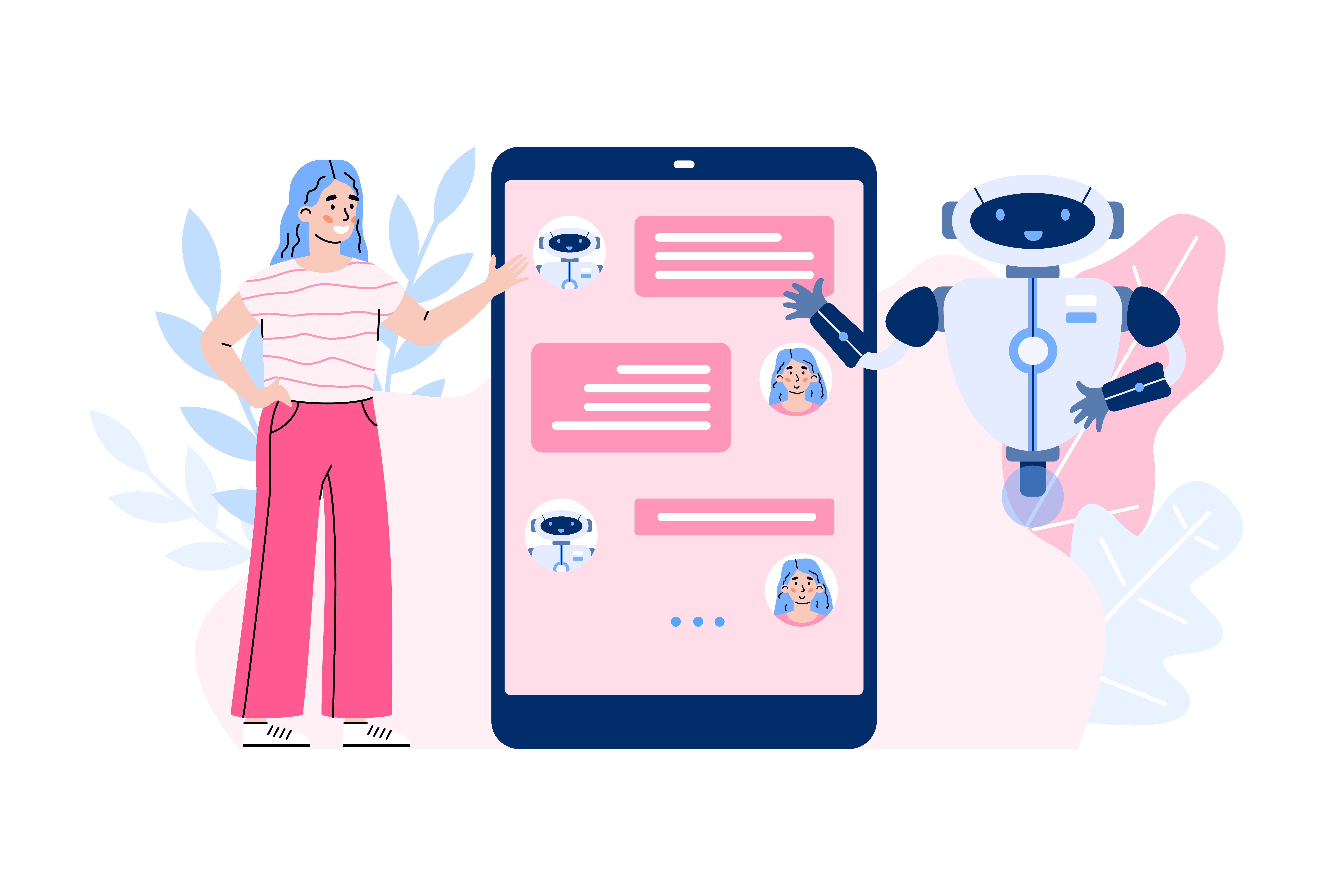
Les agents conversationnels (chatbots) et le clavardage en direct sont deux outils puissants qui aident les entreprises à rationaliser leurs communications, à réduire les temps d'attente et à améliorer la satisfaction de la clientèle. Mais comment savoir lequel utiliser, ou si vous avez besoin des deux?
Dans ce guide, nous explorerons les principales différences, les avantages et la façon de maximiser la puissance des agents conversationnels et du clavardage en direct pour offrir des expériences de service à la clientèle fluides.
Qu'est-ce qu'un agent conversationnel? Le soutien à la clientèle propulsé par l'IA expliqué
Un agent conversationnel est un outil propulsé par l'IA qui automatise les interactions avec les clients en utilisant le traitement du langage naturel (TLN) et l'apprentissage automatique. Selon IBM, les agents conversationnels peuvent comprendre les demandes des clients et fournir des réponses instantanées, imitant souvent une conversation humaine.
Grâce aux avancées de l'IA, les agents conversationnels sont désormais capables de traiter des requêtes plus complexes et d'anticiper les besoins des clients en fonction de mots-clés spécifiques.
Mais quels sont les avantages d'utiliser un agent conversationnel pour votre service à la clientèle? Continuez votre lecture pour le découvrir.
Les 5 principaux avantages de l'utilisation d'un agent conversationnel pour le service à la clientèle
1) Soutien à la clientèle 24/7
Les attentes croissantes des clients d'aujourd'hui signifient qu'ils recherchent désormais des moyens rapides et pratiques de communiquer avec le service de soutien d'une organisation. Avec un agent conversationnel, votre organisation peut aider ses clients en tout temps, y compris en dehors des heures d'ouverture. Maintenir un centre de contact doté d'agents humains 24/7 est difficile et coûteux, surtout pour les petites et moyennes organisations. Les agents conversationnels permettent aux organisations d'automatiser les réponses et d'offrir des options de libre-service, éliminant ainsi les temps d'attente. Cela permet aux clients de résoudre leurs problèmes rapidement et facilement, à leur propre rythme.
2) Réduire la charge de travail des agents
Automatisez les réponses aux questions fréquemment posées (FAQ) pour fournir aux clients des réponses instantanées. Les FAQ courantes incluent les heures d'ouverture, les politiques de retour et les détails d'expédition. Cependant, les agents conversationnels peuvent faire plus que simplement répondre aux demandes de base—ils peuvent également aider à des tâches comme la planification de rendez-vous et le traitement des paiements. En gérant ces demandes routinières, les agents conversationnels libèrent les agents pour qu'ils puissent se concentrer sur des problèmes clients plus complexes, améliorant ainsi l'efficacité et le service à la clientèle.
3) Offrir aux clients des options de libre-service
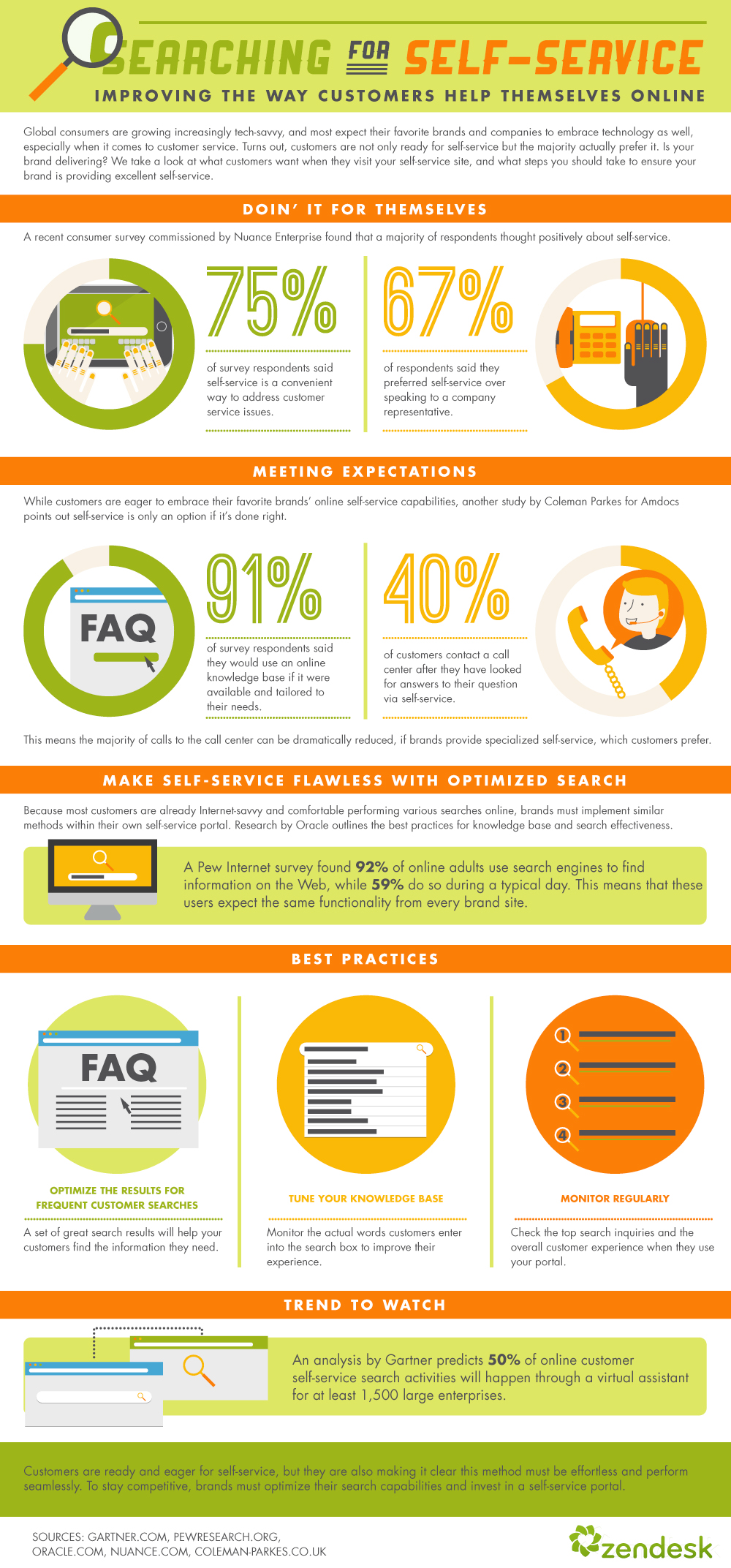
Selon Nuance Enterprise, 67 % des clients préfèrent utiliser des options de libre-service plutôt que de parler à un représentant de l'organisation. Grâce aux options de libre-service, les clients peuvent prendre les choses en main. Les clients peuvent trouver des réponses et des instructions étape par étape pour résoudre leurs problèmes grâce au libre-service. Par conséquent, cela permet à vos agents d'économiser du temps et améliore la satisfaction de vos clients.
Les options de libre-service courantes incluent la récupération d'informations sur le compte, la vérification des mises à jour d'expédition, et plus encore. Pour les demandes plus complexes, les agents conversationnels peuvent trier et acheminer efficacement les demandes de clavardage Web vers le représentant approprié pour une assistance supplémentaire.
4) Offrir des expériences client cohérentes
Lorsque les clients interagissent avec des agents en direct, la qualité du service peut varier. Un agent conversationnel assure une expérience client excellente et constante en maintenant un ton, une voix et un contexte uniformes. Contrairement aux agents humains, les agents conversationnels éliminent les fautes d'orthographe et réduisent le risque de mauvaise interprétation, garantissant des réponses précises et fiables.
5) Améliorer la personnalisation
Statista a indiqué que 64 % des entreprises estiment que les agents conversationnels leur permettront d'offrir une expérience de soutien plus personnalisée à leurs clients. Un agent conversationnel peut recueillir des informations contextuelles auprès des clients avant de transférer la conversation à un agent en direct. Les informations contextuelles permettent à vos agents d'économiser du temps et évitent aux clients de devoir se répéter en partageant leur interaction précédente. Cela est particulièrement utile si vos clients se sentent déjà frustrés en raison de longs temps d'attente.
De plus, les agents conversationnels deviennent plus intelligents à mesure que l'IA et l'apprentissage automatique progressent. Les agents conversationnels peuvent détecter des mots-clés spécifiques et fournir des recommandations personnalisées pour déterminer si le problème peut être résolu avant de transmettre l'interaction à un agent.
Qu'est-ce qu'un « clavardage en direct »? Engagement client d'humain à humain
Le clavardage en direct met les clients en contact avec des agents humains en temps réel. Contrairement aux agents conversationnels, le clavardage en direct offre un soutien humain pour les problèmes complexes, la résolution de crises et les interactions personnalisées.
Nous avons presque tous déjà utilisé le clavardage en direct pour communiquer avec un représentant afin d'obtenir des conseils bancaires, de répondre à des besoins d'achat, et plus encore.
Selon McKinsey & Company, 52 % des clients souhaitent parler à un agent en direct lorsqu'ils sont confrontés à une crise et qu'ils ont besoin d'une solution à un problème lié à un produit ou à un service. Ils sont souvent privilégiés lorsque les clients ont besoin d'un soutien immédiat, car une personne peut les aider en temps réel.
Le clavardage en direct va au-delà de la simple réponse aux demandes immédiates. Continuez votre lecture pour découvrir comment le clavardage en direct peut améliorer le service à la clientèle de votre organisation.
Les 3 principaux avantages de l'utilisation du clavardage en direct pour le service à la clientèle
1) Établir des relations plus solides avec les clients
Bien que les agents conversationnels puissent personnaliser certaines interactions, ils peuvent tout de même être moins efficaces qu'un représentant en direct lorsqu'il s'agit d'offrir une réponse humaine personnalisée. Une étude de CGS révèle que 86 % des consommateurs préfèrent interagir avec un agent humain et que 71 % des consommateurs seraient moins enclins à utiliser une marque s'ils savaient que celle-ci ne dispose pas d'agents humains. Le clavardage en direct permet aux agents d'offrir un soutien empathique et personnalisé, ce qui peut manquer aux agents conversationnels.
Les interactions personnalisées par clavardage en direct créent une expérience de soutien plus humaine, ce qui renforce la confiance et la fidélité. Les agents en direct peuvent reconnaître les clients fidèles, se souvenir des problèmes antérieurs et fournir des recommandations sur mesure, autant d'éléments qui contribuent à un parcours client plus positif et à une amélioration des taux de rétention. Un engagement humain authentique crée des liens et encourage la fidélisation.
2) Résoudre des problèmes plus complexes
Les agents de clavardage en direct ont accès à l'historique des interactions avec les clients grâce à une intégration CRM, ce qui leur permet de comprendre les interactions passées et d'adapter leurs réponses plus efficacement. Bien que les agents conversationnels avancés en langage naturel puissent engager des conversations dynamiques et s'adapter en fonction des entrées de l'utilisateur, les agents humains ont la capacité unique de poser des questions de suivi nuancées et de fournir des solutions personnalisées qui répondent aux besoins spécifiques des clients. Cette capacité à résoudre des problèmes en temps réel fait du clavardage en direct un outil essentiel pour résoudre efficacement les problèmes complexes.
3) Augmenter les conversions et les prospects
Le clavardage en direct ne sert pas uniquement à résoudre les problèmes des clients; c'est aussi un outil puissant pour la génération de prospects. Depuis de nombreuses années, les clients utilisent le clavardage en direct pour communiquer avec les organisations afin de résoudre des problèmes. Bien que cela soit toujours vrai, le clavardage en direct peut être utilisé comme un outil efficace pour générer des prospects qualifiés. Selon HubSpot, 90 % des clients considèrent qu'une réponse « immédiate » est importante ou très importante lorsqu'ils ont une question liée au service à la clientèle. Un clavardage en direct sur votre site Web permet aux clients potentiels de poser des questions sur un produit ou un service en temps réel, ce qui accélère la prise de décision.
Agent conversationnel ou clavardage en direct : lequel est le meilleur pour votre entreprise?
Il n'y a pas de gagnant incontesté lorsqu'il s'agit de choisir entre un agent conversationnel et le clavardage en direct, car chacun possède ses propres avantages. Comme mentionné précédemment, l'élément humain dans le service à la clientèle est essentiel pour de nombreux clients, et parler à un agent conversationnel automatisé ne permet pas toujours de résoudre tous les problèmes, surtout les plus complexes.
Il n'y a pas de réponse universelle : les agents conversationnels et le clavardage en direct se complètent pour offrir la meilleure expérience de service à la clientèle. Voici une comparaison rapide :
Fonctionnalité
Agent conversationnel
Clavardage en direct
Disponibilité
24/7, réponse instantanée
Limité aux heures de bureau
Temps de réponse
Immédiat
Rapide, mais dépend de la disponibilité des agents
Gestion de la complexité
Idéal pour les FAQ et les demandes simples
Idéal pour les problèmes complexes et la gestion de crise
Expérience client
Réponses standardisées
Réponses personnalisées et empathiques
Coût et évolutivité
Rentable, évolutivité facile
Coût plus élevé, limité par la capacité des agents
Pour que les organisations puissent offrir un excellent service à la clientèle et proposer des expériences de qualité, les agents conversationnels (chatbots) et le clavardage en direct doivent être utilisés conjointement. En fait, ils améliorent mutuellement leur efficacité.
Comment les agents conversationnels et le clavardage en direct collaborent pour un meilleur service à la clientèle
- Les agents conversationnels peuvent constituer la première ligne de communication avec vos clients, suivis par des agents en direct : Les agents conversationnels servent de première ligne de communication en répondant instantanément aux questions des clients. En automatisant les réponses aux questions fréquentes et aux problèmes courants, ils contribuent à réduire les temps de réponse et à améliorer la satisfaction de la clientèle.
- Transfert fluide vers des agents en direct au besoin : Bien que les agents conversationnels gèrent efficacement les demandes de base, certaines préoccupations des clients nécessitent une intervention humaine. Dans de tels cas, l'agent conversationnel peut transférer la conversation à un agent humain qualifié. Les systèmes avancés peuvent utiliser le routage basé sur les compétences pour s'assurer que les clients sont dirigés vers l'agent le plus approprié, minimisant ainsi le temps de résolution et la frustration.
- Les agents conversationnels libèrent les agents des tâches banales : En traitant les demandes routinières et répétitives, les agents conversationnels permettent aux agents en direct de se concentrer sur des problèmes plus approfondis et délicats sur le plan émotionnel. Cela améliore non seulement l'expérience client, mais accroît également la satisfaction au travail des agents, qui peuvent mettre leurs compétences au service de la résolution de problèmes et de l'engagement client plutôt que d'effectuer des tâches répétitives.
Réflexions finales : Le meilleur des deux mondes
La réussite du service à la clientèle ne consiste pas à choisir entre les agents conversationnels et le clavardage en direct, mais à les utiliser stratégiquement ensemble. Les entreprises qui mettent en œuvre ces deux solutions peuvent optimiser leur efficacité, réduire leurs coûts opérationnels et offrir des expériences client fluides et de haute qualité.
Vous souhaitez transformer votre stratégie de service à la clientèle ? Découvrez comment les agents conversationnels et le clavardage en direct peuvent collaborer pour accroître la satisfaction de vos clients. Contactez-nous dès aujourd'hui pour découvrir comment nos solutions peuvent vous aider !
%20-%20Google%20Ads.png)