iceAI Studio vous donne un contrôle total sur les connaissances de vos agents IA et sur la façon dont ils dirigent les clients, favorisant ainsi des résolutions plus rapides et de meilleures expériences.
De la norme PCI-DSS à la certification SOC 2, le centre de contact ice est bâti sur un cadre de conformité qui saura satisfaire votre équipe de sécurité
Protégez vos données avec le centre de contact ice
Publié le :
June 2, 2021
Cliquez ici pour visionner l'enregistrement complet de la session.
Risques et défis
Dans notre monde en constante évolution, de nouveaux risques de sécurité sont continuellement identifiés. Des normes de sécurité existent pour aider à atténuer ces risques, mais il est important de savoir quels types de préoccupations nous devons surveiller. Voici quelques domaines de préoccupation :
Sécurité des données – Dans le monde numérique d'aujourd'hui, nous devons savoir où résident nos données, comment elles y parviennent et qui y a accès.
Transactions par carte de paiement – Toute transaction en ligne comporte un risque inhérent. Lorsqu'un consommateur transmet virtuellement son numéro de carte de paiement à un commerçant, il existe un risque que la carte soit volée et utilisée de manière frauduleuse.
Confidentialité des données et respect de la législation sur la protection de la vie privée – La confidentialité des données englobe les deux points précédents. Si vous donnez votre numéro de carte à un représentant d'un centre de contact, vous pouvez vous demander si quelqu'un dans cette entreprise peut ensuite le retrouver. Comme la législation sur la protection de la vie privée évolue constamment, les entreprises doivent également s'assurer d'être à jour sur les normes de l'industrie.
Reprise après sinistre et continuité des activités – Les entreprises doivent avoir des plans en place pour assurer la poursuite de leurs activités quotidiennes dans le pire des scénarios, comme la compromission de serveurs ou l'inaccessibilité des bureaux.
Avoir des plans et des politiques détaillés pour répondre à ces préoccupations est la chose la plus importante qu'une entreprise puisse faire pour sa sécurité. En plus des préoccupations quotidiennes mentionnées ci-dessus, les entreprises font face à certains enjeux de sécurité spécifiques à la COVID dans le monde actuel.
Lorsque de nombreuses organisations ont envoyé leurs employés travailler à domicile au début de la pandémie de COVID-19, celles qui n'étaient pas préparées au télétravail ont dû se démener pour élaborer des politiques garantissant que la sécurité ne serait pas compromise. Le télétravail signifie que les employés n'utilisent pas le réseau sécurisé du bureau. Les superviseurs trouvent également plus difficile de gérer les opérations quotidiennes sans pouvoir voir leurs agents. Si les employés utilisent des appareils potentiellement non sécurisés, le besoin de sécurité est encore plus grand.
Protocoles de sécurité
Compte tenu de tous ces risques de sécurité, il est essentiel de suivre des protocoles de sécurité. Certains de ces protocoles incluent la norme de sécurité des données de l'industrie des cartes de paiement (PCI-DSS), les contrôles d'organisation et de service (SOC 2) et le programme de conformité des applications Microsoft 365. Chaque audit est mené différemment et se concentre sur des fonctionnalités de base distinctes. Cependant, chacune de ces conformités partage les caractéristiques suivantes :
Cadre complet de sécurité de l'information
Politiques de développement sécurisé
Pratiques strictes de gestion du changement
Correctifs, analyses et tests réguliers
Validation annuelle par un tiers fondée sur des preuves
Norme de sécurité des données de l'industrie des cartes de paiement (PCI-DSS)
La norme de sécurité des données de l'industrie des cartes de paiement, aussi appelée PCI-DSS, est administrée par le Conseil des normes de sécurité de l'industrie des cartes de paiement. Il s'agit d'un ensemble de contrôles de cybersécurité et de pratiques commerciales qui s'applique à « toute entité qui stocke, traite et/ou transmet des données de titulaires de carte ». Cela inclut pratiquement toute organisation qui vend des produits ou accepte des dons. La norme PCI-DSS sert à garantir que les numéros de cartes de paiement demeurent sécurisés lorsqu'ils sont transmis dans l'écosystème économique. La conformité PCI est obtenue grâce à un audit fondé sur des preuves et doit être renouvelée chaque année.
Contrôles des services et des organisations (SOC 2)
Les contrôles des services et des organisations, aussi appelés SOC 2, constituent un audit technique réalisé par un auditeur tiers. Il s'agit d'un cadre de sécurité et de confidentialité des données établi par l'American Institute of Certified Public Accountants (AICPA). La norme SOC 2 sert à vérifier si les contrôles de votre organisation de services répondent aux exigences rigoureuses du cadre de confidentialité et de sécurité SOC. Elle repose sur 5 principes de confiance. Le protocole s'applique à toute organisation qui souhaite garantir la sécurité, la disponibilité, le traitement, l'intégrité et la confidentialité des données de ses clients. La certification SOC 2 comporte 2 étapes. Un rapport de type 1, qui constitue généralement la première certification d'une organisation, examine les contrôles internes, la gouvernance des données, la sécurité et la confidentialité au moment de l'audit. Le rapport de type 2 porte sur l'efficacité de ces contrôles depuis le précédent audit de l'entreprise, généralement effectué un an plus tôt.
Certification Microsoft Teams
La validation des contrôles de sécurité était requise pour que le centre de contact ice obtienne son statut de centre de contact certifié Microsoft Teams. Le programme de conformité des applications Microsoft 365 est une approche en trois phases de la sécurité et de la conformité des applications au sein des applications Microsoft 365. Il comprend la vérification de l'éditeur, l'attestation de l'éditeur et, enfin, la certification Microsoft 365. Il s'applique à toute organisation possédant une application cherchant à s'intégrer à un produit de l'écosystème Microsoft 365. Les 4 secteurs que Microsoft examine lors de la certification d'une solution sont la sécurité des applications, la sécurité opérationnelle et le déploiement sécurisé, la sécurité et la confidentialité du traitement des données, ainsi qu'un cadre de conformité externe facultatif. La certification sert à offrir aux organisations l'assurance et la confiance que les données et la confidentialité sont adéquatement sécurisées et protégées lors de l'utilisation des applications Microsoft Teams.
Ce que fait ComputerTalk
ComputerTalk a obtenu toutes les certifications mentionnées ci-dessus. Nous sommes certifiés PCI-DSS depuis 2013 et SOC 2 depuis 2019 (actuellement avec une certification de type 2). Nous sommes partenaires Microsoft Gold depuis 2005 et nous sommes récemment devenus l'un des premiers à obtenir la certification Microsoft Teams pour centre de contact. La sécurité des clients est au cœur de chaque décision prise par ComputerTalk.
Ce que votre organisation peut faire
Chaque organisation peut prendre des mesures pour améliorer sa sécurité globale. Ces mesures comprennent :
Gestion rigoureuse des mots de passe – ice offre une politique de mots de passe personnalisable pour les utilisateurs ou la possibilité d'utiliser l'authentification unique. Les entreprises peuvent choisir la manière dont cela est appliqué.
Formation en cybersécurité – Vous pouvez contribuer à protéger votre organisation en veillant à ce que vos employés soient bien formés en cybersécurité. ComputerTalk dispense une formation en sécurité dans chaque département.
Vérifications de sécurité pour les nouvelles recrues et les ressources – Les organisations peuvent également se protéger en effectuant des vérifications d'antécédents policiers ou d'autres contrôles sur les nouvelles recrues.
Initiative à l'échelle de l'organisation – Faites de la sécurité une initiative à l'échelle de l'organisation. Chacun doit faire sa part. Vous pouvez contribuer à cette mission en créant une équipe interfonctionnelle dédiée aux exigences de sécurité.
La puissance de ice
icePay
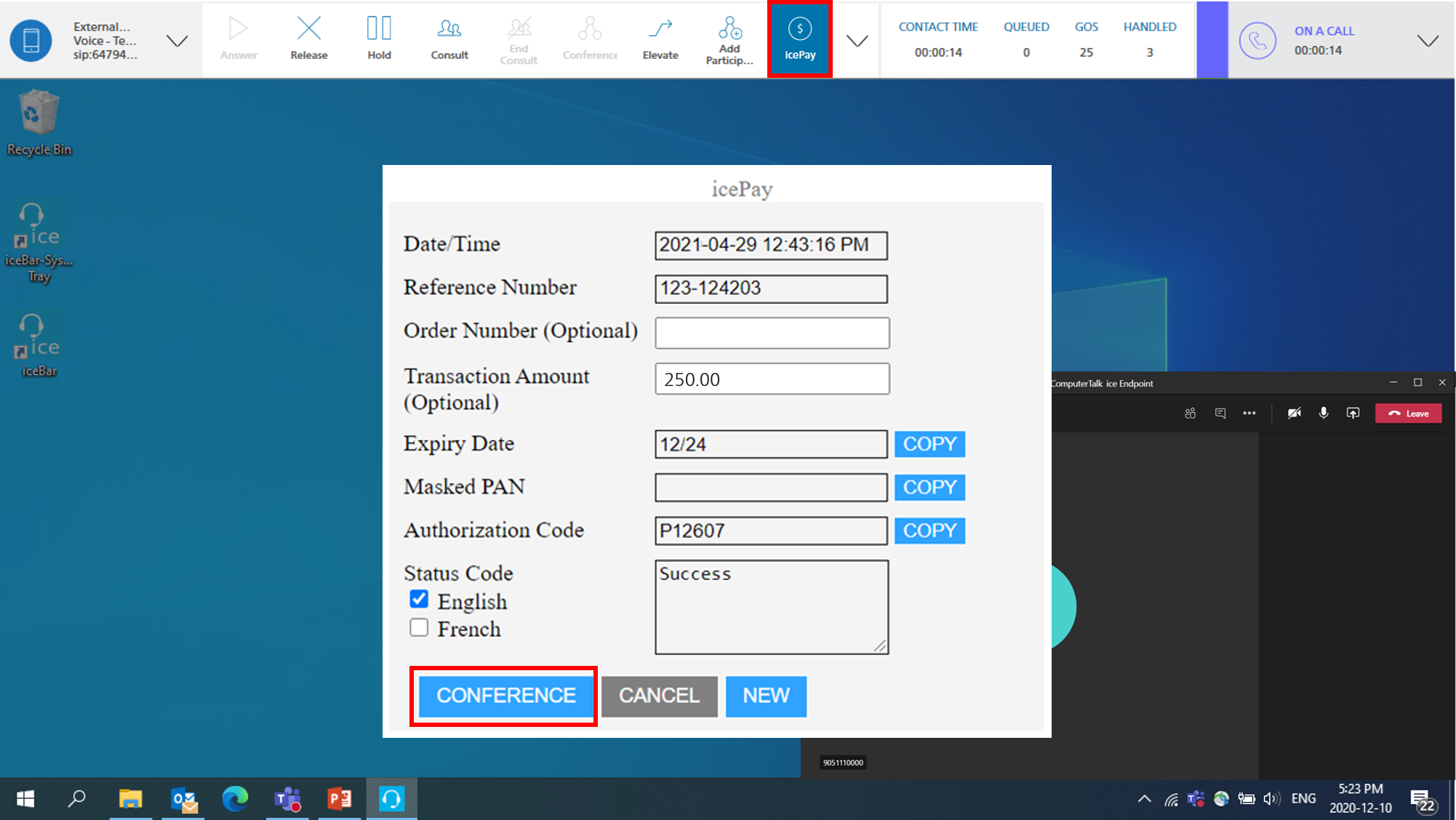
icePay, l'une de nos applications autonomes, est utilisée pour accepter des paiements en toute sécurité pour votre organisation sans divulguer les détails de la carte à l'agent.
Par exemple, supposons que Jean souhaite louer un canot dans un magasin de détail. Il appelle le magasin et est mis en relation avec Sara, du département de location. Sara explique les détails de la location à Jean. Au moment de percevoir le paiement, Sara clique sur le bouton icePay dans sa iceBar. Lorsque la fenêtre icePay s'ouvre, Sara saisit le montant du paiement, puis clique sur Conférence pour lancer l'application icePay avec Jean.
À partir de là, Jean sera guidé par une application libre-service pour effectuer le paiement en toute sécurité. Sara restera en ligne pour aider Jean s'il rencontre des problèmes, mais les informations de la carte ne seront à aucun moment divulguées à Sara. La fenêtre icePay sera mise à jour une fois la transaction confirmée. Sara pourra alors finaliser les détails de la location avec Jean.
Chiffrement des données
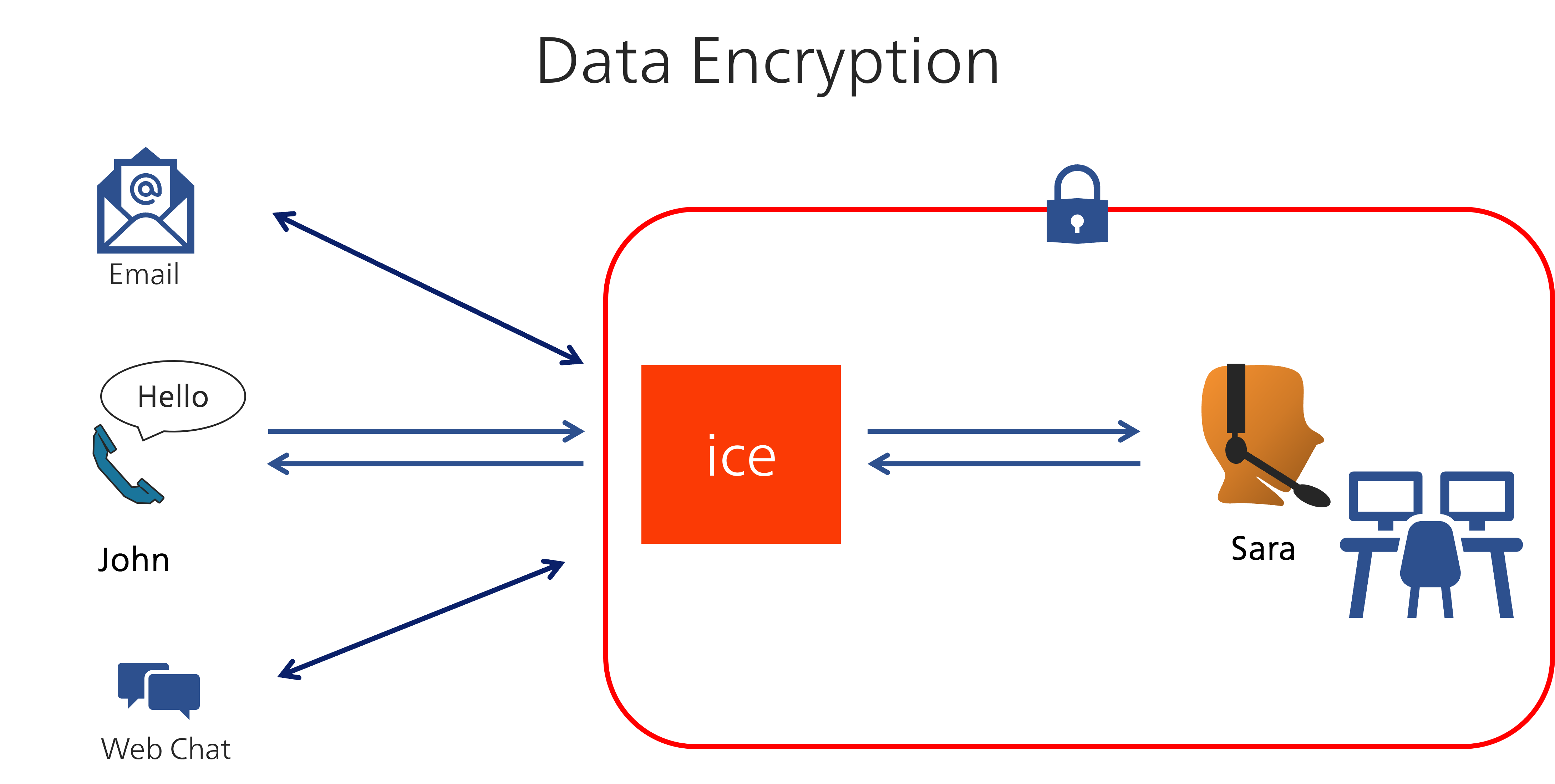
Bien que l'application icePay soit conçue spécifiquement pour le traitement sécurisé des paiements, le chiffrement des données est une norme pour toutes les interactions au sein de ice.
Lorsque Jean appelle et parle à Sara, les données sont chiffrées aussi bien vers l'agent que vers l'appelant. Cela s'applique également aux contacts par courriel et par messagerie instantanée.
Les préoccupations en matière de sécurité évoluent constamment. ComputerTalk continuera de dépasser les normes de l'industrie pour garantir que vos données soient toujours sécurisées.
Pour en savoir plus, contactez votre responsable de compte ou demandez une démonstration. Notre prochaine session Slice of ice aura lieu le 16 juin
Abonnez-vous à notre infolettre
Merci d'avoir communiqué avec ComputerTalk !
Nous prendrons contact avec vous sous peu. Il y a aussi un bouton de discussion maintenant dans le coin inférieur droit du site Web, si vous souhaitez nous parler immédiatement.
Oups! Une erreur est survenue lors de l'envoi du formulaire.
%20-%20Google%20Ads.png)