iceAI Studio vous donne un contrôle total sur les connaissances de vos agents IA et sur la façon dont ils dirigent les clients, favorisant ainsi des résolutions plus rapides et de meilleures expériences.
De la norme PCI-DSS à la certification SOC 2, le centre de contact ice est bâti sur un cadre de conformité qui saura satisfaire votre équipe de sécurité
Les agents conversationnels IA sont devenus une partie importante de notre quotidien. Apprenez-en davantage sur ces agents virtuels modernes, alimentés par l'IA.
Vous avez probablement entendu parler de ChatGPT maintenant, et ce n'est pas surprenant. En fait, les consommateurs interagissent quotidiennement avec des agents conversationnels sur les applications mobiles, les réseaux sociaux et les sites web d'entreprise.
Les agents conversationnels ont considérablement évolué au cours des dernières années. Alors que les premières versions n'étaient guère plus que des programmes de FAQ interactifs, les solutions modernes sont plus intelligentes et plus humaines que jamais.
Voici tout ce que vous devez savoir sur les agents conversationnels IA pour le service client, de leurs avantages et cas d'utilisation à la façon d'obtenir le meilleur rendement de votre investissement en IA.
Qu'est-ce qu'un agent conversationnel IA?
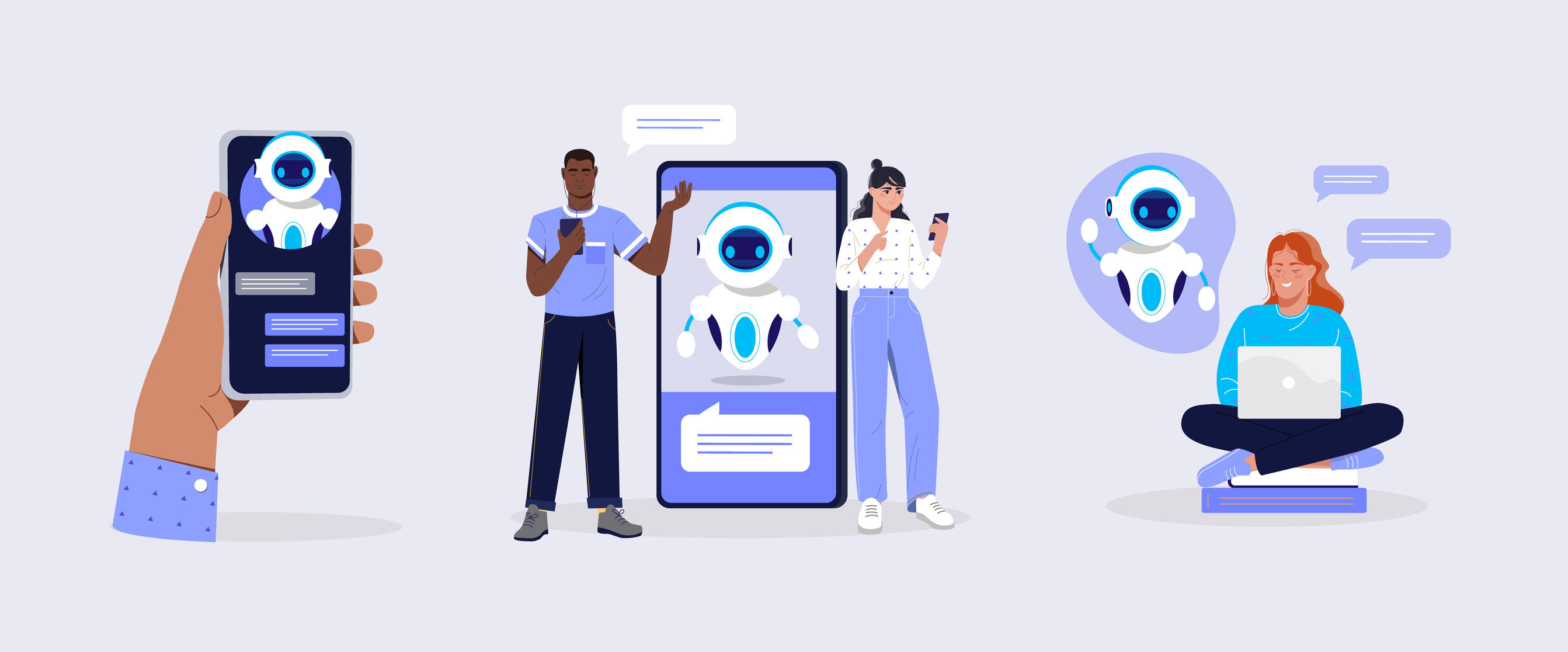
Les agents conversationnels IA sont des applications logicielles qui utilisent l'intelligence artificielle pour simuler une conversation humaine.
Les premières formes d'agents conversationnels étaient simplement programmées pour répondre aux questions fréquemment posées (FAQ) avec des réponses pré-écrites. On les appelait des agents conversationnels basés sur des règles parce qu'ils communiquaient à l'aide de règles prédéfinies.
Les agents conversationnels IA sont une évolution de l'agent conversationnel traditionnel basé sur des règles. Les agents conversationnels IA offrent des conversations et des expériences utilisateur plus naturelles en employant des technologies d'IA conversationnelle. Ces technologies comprennent le traitement du langage naturel, la compréhension du langage naturel et les modèles d'apprentissage automatique.
Les agents conversationnels IA remplacent rapidement les agents conversationnels basés sur des règles dans le service client. Par exemple, au lieu de simplement fournir des réponses aux FAQ, les entreprises peuvent utiliser des agents conversationnels alimentés par l'IA pour aider les clients à passer des commandes, prendre des rendez-vous, résoudre des problèmes courants et offrir un soutien multilingue.
Aujourd'hui, il existe de nombreux types d'agents conversationnels IA différents, et tous ne sont pas utilisés dans le service client.
Parmi les nombreux types d'agents conversationnels disponibles aujourd'hui, les agents conversationnels d'IA générative, tels que ChatGPT et celui de Google, Gemini, sont peut-être les plus populaires. Ils sont largement reconnus pour leur capacité à aider à répondre à des questions liées à presque n'importe quel sujet.
Clavardage en direct, agent conversationnel et assistant virtuel
L'expansion rapide expansion de la technologie des agents conversationnels a créé une certaine confusion entre quelques termes similaires. Trois termes couramment utilisés dans l'industrie du service à la clientèle sont le clavardage en direct, l'agent conversationnel et l'assistant virtuel.
Clavardage en direct: Les systèmes de clavardage en direct donnent aux agents humains accès à un canal où ils peuvent interagir directement avec les consommateurs par messagerie instantanée. Il n'y a pas de « bot » impliqué dans la conversation ici. Cependant, certains systèmes de clavardage en direct peuvent offrir des outils d'IA pour l'analyse des sentiments et l'encadrement des agents.
Agent conversationnel: Le terme « agent conversationnel » désigne tout logiciel qui imite une conversation humaine. Cela inclut les agents conversationnels traditionnels, basés sur des règles, et les agents conversationnels d'IA. Alors que les agents conversationnels traditionnels étaient programmés pour répondre à un ensemble limité de questions avec des réponses préécrites, les agents conversationnels d'IA modernes peuvent interpréter les entrées humaines et y répondre intelligemment. Certains agents conversationnels d'IA, comme ChatGPT, sont entraînés sur de vastes ensembles de données, leur permettant de répondre à presque toutes les questions. D'autres sont entraînés sur des ensembles de données plus petits, ce qui leur permet de répondre uniquement à un ensemble restreint de questions. Les agents conversationnels sont souvent appelés « agents virtuels » lorsqu'ils sont utilisés dans le service à la clientèle, car ils imitent une conversation avec un agent en direct.
Assistant virtuel: Certains agents conversationnels d'IA sont connus sous le nom d'assistants virtuels. Les plus populaires d'entre eux incluent Siri d'Apple et Alexad'Amazon. Ce qui rend les assistants virtuels uniques des autres agents conversationnels, c'est leur conception et leur objectif. Les assistants virtuels sont principalement conçus pour vous aider dans votre routine quotidienne en faisant des choses comme jouer de la musique ou définir des rappels de rendez-vous. Cependant, certaines entreprises ont commencé à mettre à niveau leurs assistants virtuels avec la technologie d'IA générative pour les rendre plus intelligents et plus polyvalents.
Utilisations courantes des chatbots IA
Au fil des ans, les chatbots IA sont devenus plus sophistiqués, et leurs cas d'utilisation ont évolué. Il existe des chatbots de centre d'appels qui peuvent détecter l'intention d'un appelant et l'acheminer automatiquement vers l'agent le plus approprié. Les entreprises utilisent également des chatbots pour aider les clients avec des tâches comme passer des commandes ou suivre leurs expéditions.
Usages courants dans le service à la clientèle
Répondre aux questions sur un produit ou un service
Vérifier le statut des commandes et les informations de suivi
Traiter les retours ou les remboursements
Recueillir les commentaires des clients
Vérifier les soldes de compte et les détails de paiement
Offrir un libre-service personnalisé
Les chatbots IA peuvent également soutenir les employés avec un accompagnement étape par étape, une aide au dépannage et même la génération de contenu.
Cas d'utilisation par secteur d'activité
Commerce de détail: Les chatbots IA peuvent améliorer l'expérience d'achat en offrant des recommandations personnalisées aux clients en fonction de leurs goûts et préférences. Ils peuvent également partager des informations sur les produits, suivre le statut des commandes d'achat et générer des prospects en contactant de manière proactive les personnes qui naviguent en ligne.
Soins de santé: Dans des endroits comme les hôpitaux et les cliniques médicales, les chatbots IA peuvent fournir aux patients des réponses à des questions de base et les mettre en contact avec des professionnels de la santé. Les chatbots peuvent également aider à la prise de rendez-vous, à l'admission des patients et aux suivis de patients. L'utilisation de chatbots pour des conseils médicaux réels n'est pas recommandée, mais les chercheurs sont travaillent sur des outils qui pourraient être capables de diagnostiquer des patients à l'avenir.
Finance: Quand ils sont utilisés par les banques et les coopératives de crédit, les agents conversationnels IA peuvent offrir des conseils et du soutien sur des sujets tels que les stratégies d'investissement et les produits bancaires. Ils peuvent également aider à traiter les transactions et à gérer les demandes de renseignements sur les comptes.
Voyages et hôtellerie: Les agents conversationnels IA peuvent aider avec les recommandations de voyage, fournir des mises à jour en temps réel sur les retards de vol et faciliter la réservation de voitures de location et d'hôtels.
Les entreprises de tous les secteurs peuvent utiliser les agents conversationnels pour diverses tâches, allant de l'aide aux demandes générales de service à la clientèle à la rationalisation des processus de vente et à l'amélioration de la productivité des employés.
Les avantages des agents conversationnels IA
Les agents conversationnels IA peuvent apporter des avantages à de nombreux aspects d'une entreprise. Cependant, ils sont particulièrement utiles pour offrir un service à la clientèle par l'intermédiaire du centre de contact. Lorsqu'ils sont utilisés correctement, ils peuvent améliorer chaque point de contact du parcours client, renforcer l'engagement et la fidélité à la marque, et même augmenter les prospects et les conversions de ventes.
Parmi les avantages les plus importants des agents conversationnels IA, on retrouve:
Offrir un service 24/7
Même les plus grandes entreprises ont du mal à s'assurer que les membres de leur équipe sont disponibles pour répondre aux préoccupations et aux questions des clients le soir, les fins de semaine et les jours fériés.
Cependant, les agents conversationnels peuvent fonctionner 24 heures sur 24 sans avoir besoin de pause. Cela permet aux entreprises d'offrir un soutien constant de jour comme de nuit – chaque fois que les clients en ont besoin.
En fait, 64% des clients affirment que ce qu'ils apprécient le plus chez les agents conversationnels est leur capacité à offrir un soutien 24 heures sur 24.
Économies de coûts
Bien que les agents conversationnels IA ne puissent pas gérer toutes les interactions avec les clients, ils peuvent aider à accomplir des tâches simples de service à la clientèle et réduire les temps de réponse et d'interaction. Cela diminue le montant que les entreprises doivent dépenser pour doter leurs centres de contact en agents humains.
En 2024, par exemple, les agents conversationnels devraient faire économiser aux entreprises jusqu'à 2,5 milliards d'heures de travail, ce qui entraînera des réductions significatives des coûts opérationnels.
Augmenter la productivité des employés
Les agents conversationnels IA peuvent autonomiser les employés et stimuler leur productivité de diverses manières. Plus précisément, ils réduisent la nécessité pour les agents humains de traiter les demandes banales et les tâches répétitives, leur donnant ainsi plus de temps pour se concentrer sur un travail créatif et stratégique.
Les chatbots peuvent également contribuer à une meilleure expérience employé. Par exemple, ils peuvent être utilisés pour faciliter la rétroaction des employés et les sondages internes, favorisant une meilleure communication entre les employeurs et leur personnel. Ce qui mène ultimement à des employés plus productifs, engagés et satisfaits.
Évolutivité
La plupart des chatbots IA sont flexibles et adaptables par conception. Ils peuvent gérer des milliers de conversations simultanément, à condition d'utiliser le logiciel approprié.
Ils peuvent également s'adapter à la hausse et à la baisse pour répondre aux demandes commerciales fluctuantes, et même s'étendre sur plusieurs canaux de communication.
Augmentation des ventes
En plus d'être d'excellents outils de service à la clientèle, les chatbots IA peuvent même être utilisés pour stimuler les ventes. En fait, de nombreuses activités liées aux ventes peuvent être automatisées par les chatbots, y compris la capture et la qualification de prospects, la planification de démonstrations de produits et l'offre proactive de promotions ou de codes de réduction.
Les chatbots IA peuvent également aider à optimiser les conversations et à maximiser les revenus. Par exemple, les chatbots peuvent suggérer des opportunités de vente croisée et de vente incitative en examinant les achats passés d'un client ou ce qu'il a dans son panier d'achat.
Analyses plus approfondies
Les chatbots alimentés par l'IA sont excellents pour la collecte et l'analyse de données, fournissant des analyses commerciales approfondies. Ils peuvent aider à recueillir des informations sur votre public cible, les préférences des clients et même le sentiment des clients.
Par exemple, les chatbots IA peuvent lire le ton émotionnel d'un client en fonction de son choix de mots et catégoriser son sentiment comme positif, négatif ou neutre. Les chatbots peuvent également être programmés pour recueillir des commentaires à la fin de chaque interaction client.
Cela peut aider votre entreprise à prendre des décisions éclairées concernant le lancement de nouveaux produits et services ainsi que l'optimisation de votre stratégie d'expérience client.
5 meilleures pratiques pour les chatbots IA
Bien que les chatbots IA puissent offrir de nombreux avantages aux entreprises, ils ne sont pas sans défis. La mise en œuvre de la bonne technologie de chatbot exige des entreprises qu'elles réfléchissent attentivement à leurs objectifs, aux exigences de sécurité et de conformité, et à leur public cible.
Voici quelques-unes des meilleures pratiques que vous devriez suivre lors de l'intégration de chatbots dans vos plateformes de service à la clientèle.
1. Tenir compte des cas d'utilisation et des objectifs
Avant d'intégrer des chatbots IA dans votre centre de contact, il est important d'identifier les bons cas d'utilisation et les opportunités pour cette technologie. La solution adaptée à vos besoins dépendra fortement de ce que vous souhaitez accomplir avec votre chatbot.
Par exemple, si vous voulez rationaliser votre centre d'appels et réduire les temps de traitement des contacts, les transferts d'appels et les appels abandonnés, vous pourriez opter pour un chatbot IA qui fonctionne avec votre système IVR. Si vous voulez offrir des expériences client hyper-personnalisées, vous devrez vous assurer que votre chatbot peut exploiter les données de votre CRM et de vos plateformes de données client pour personnaliser chaque interaction client.
Si vous mettez en œuvre De style Copilot agents conversationnels pour le soutien aux agents, vous devrez vous assurer que ces outils peuvent s'adapter à vos besoins, offrant un encadrement en temps réel, des options de génération ou de résumé de contenu, en fonction des flux de travail de vos employés.
2. Trouver le juste équilibre entre l'apport humain et l'IA
L'essor de la technologie des agents conversationnels basés sur l'IA n'a pas éliminé le besoin d'interactions avec des agents humains. Les agents conversationnels sont excellents pour gérer les tâches simples et répétitives, comme le traitement des transactions, la réponse aux questions courantes ou l'aide aux clients pour vérifier le statut d'une commande.
Les agents humains sont toujours nécessaires pour les interactions qui exigent de l'empathie, la résolution de problèmes et de la créativité. Ne pas trouver le juste équilibre entre le contact humain et l'automatisation par l'IA signifie que vous risquez de nuire à vos relations avec vos clients.
Lors de l'intégration d'agents conversationnels basés sur l'IA dans votre centre de contact, assurez-vous que vos agents humains restent responsables de la gestion des tâches critiques qui ont un impact sur l'expérience client.
3. Prioriser la sécurité et la confidentialité des données
Les agents conversationnels dépendent fortement de l'accès aux données pour offrir des expériences client simplifiées et personnalisées. Cependant, les centres de contact doivent s'assurer que les données utilisées par leurs agents conversationnels sont gérées et stockées d'une manière conforme aux réglementations en matière de sécurité et de confidentialité des données.
La bonne solution d'agent conversationnel devrait chiffrer les conversations de bout en bout afin de réduire le risque de fuites de données et ne jamais partager ces informations à l'extérieur de l'entreprise.
De plus, elle devrait vous offrir un moyen complet de surveiller l'utilisation des données et de masquer les informations personnelles des dossiers lorsque nécessaire.
4. Investir dans les mises à jour et l'entretien réguliers
Les meilleurs agents conversationnels basés sur l'IA pour le service client évoluent et s'améliorent constamment. Plus vous recueillez d'informations sur vos clients ainsi que sur leur historique d'achats, leurs préférences et leurs exigences, plus vous pouvez personnaliser votre agent conversationnel pour offrir de meilleures expériences.
Une plateforme d'agent conversationnel innovante devrait vous permettre d'améliorer régulièrement votre agent conversationnel avec de nouvelles données et de tirer parti des avantages de l'apprentissage automatique pour une optimisation automatisée. Elle devrait également vous permettre de suivre votre agent conversationnel au fil du temps, alertant les membres de l'équipe lorsque des mesures d'entretien sont nécessaires afin de réduire le risque d'erreurs et de fuites de données.
Les principaux fournisseurs d'agents conversationnels s'assureront également que vous pouvez mettre à jour votre agent conversationnel avec de nouveaux modèles d'IA lorsqu'ils seront disponibles.
5. Choisir la bonne solution d'agent conversationnel
Assurez-vous d'investir dans le bon agent conversationnel basé sur l'IA pour vos besoins en évaluant attentivement vos options. Une erreur courante que font les entreprises est de ne considérer que les coûts initiaux et la facilité de mise en œuvre.
Lors du choix d'un agent conversationnel basé sur l'IA pour votre entreprise, tenez compte des facteurs suivants:
Options d'intégration de l'agent conversationnel sur différents canaux de communication
Capacité d'intégration avec les plateformes CRM et d'autres outils de centre de contact
Possibilités de personnaliser votre agent conversationnel avec le ton de voix de votre marque
Rapports et aperçus pour vous aider à suivre la performance de votre agent conversationnel
Il existe de nombreuses options d'agents conversationnels IA sur le marché aujourd'hui, il est donc important d'examiner attentivement les différentes options avant de prendre une décision.
Meilleurs agents conversationnels pour le service client en 2024
En 2024, plusieurs solutions d'agents conversationnels ouvrent la voie en matière d'innovation, de capacités d'intégration et de satisfaction client.
Voici une sélection des meilleurs agents conversationnels IA disponibles aujourd'hui.
Ada
Ada se distingue par sa plateforme sans code, la rendant incroyablement accessible aux équipes non techniques pour déployer et gérer des agents conversationnels IA. Avec Ada, les entreprises peuvent automatiser une part importante de leurs interactions client, en offrant des réponses instantanées et des expériences personnalisées.
Fonctionnalités:
Plateforme sans code
Concepteur d'agents conversationnels intuitif
Capacités d'intégration
Transfert fluide aux agents humains
Plus de 100 langues prises en charge
Idéal pour: Équipes non techniques à la recherche d'une solution facile à utiliser avec des analyses puissantes.
Freshchat
Fait partie de la suite de produits Freshworks, Freshchat offre une solution de messagerie moderne conçue pour interagir avec les clients sur leurs canaux préférés. Elle propose des fonctionnalités telles qu'une boîte de réception d'équipe personnalisable pour des interactions agent-client efficaces, la co-navigation, l'historique des conversations et la segmentation des utilisateurs pour des campagnes ciblées. Elle s'intègre également à d'autres produits de l'écosystème Freshworks pour une expérience de service client fluide.
Fonctionnalités:
Messagerie omnicanal
Analyses augmentées
Widgets personnalisables
Segmentation des utilisateurs
Plus de 33 langues
Idéal pour: Les entreprises à la recherche d'un chatbot polyvalent capable de s'intégrer en profondeur aux outils de vente et de marketing.
Chatfuel
Chatfuel est une plateforme complète de création de chatbots sans code, conçue pour Facebook, Instagram et WhatsApp. La plateforme de Chatfuel permet aux entreprises de créer des chatbots qui engagent, qualifient et convertissent des prospects directement sur les médias sociaux. Son interface intuitive et son ensemble robuste de fonctionnalités en font une solution incontournable pour toute entreprise à la recherche d'une solution de chatbot basée sur les médias sociaux.
Fonctionnalités:
Interface glisser-déposer
Prise en charge multiplateforme
Qualification automatisée
Intégration aux médias sociaux
Capacités de traitement du langage naturel
Idéal pour: Entreprises qui cherchent à maximiser leur présence sur Facebook Messenger grâce à des conversations automatisées et engageantes.
Drift
La plateforme de marketing conversationnel de Drift est conçue pour faciliter les interactions en temps réel entre les entreprises et les visiteurs de leur site web, offrant une expérience personnalisée et stimulant l'engagement et les conversions. Drift propose à la fois des chatbots IA et des options de clavardage en direct, permettant aux entreprises d'automatiser les conversations ou d'interagir avec les visiteurs avec l'aide d'un humain. Elle offre également des salutations personnalisées et des analyses approfondies pour aider les entreprises à capter et à convertir plus de prospects.
Fonctionnalités:
Qualification des prospects en temps réel
Personnalisation de l'UX
Intégration de courriel
Routage automatisé
Idéal pour: Entreprises axées sur l'utilisation de chatbots pour accélérer les ventes et améliorer les processus de génération de prospects.
HubSpot
Intégré à la plateforme CRM de HubSpot, le générateur de chatbots HubSpot permet aux entreprises de créer des chatbots qui peuvent prendre des rendez-vous, fournir des réponses aux questions courantes et qualifier des prospects. Ces bots peuvent être créés sans codage et fonctionnent de manière transparente avec la suite d'outils de HubSpot, facilitant ainsi le développement des prospects et l'automatisation des flux de travail.
Fonctionnalités:
Intégration CRM
Personnalisation du contenu
Modèles faciles à utiliser
Prise en charge multilingue
Idéal pour: Les utilisateurs de HubSpot qui cherchent à étendre les capacités de leur CRM avec des agents virtuels automatisés.
Netomi
La plateforme de Netomi alimentée par l'IA vise à offrir des interactions de service client hautement personnalisées à grande échelle. Netomi propose des agents conversationnels qui exploitent la compréhension du langage naturel (NLU) pour des conversations plus humaines, et s'intègrent aux principales plateformes de messagerie et aux centres de services. Netomi prend en charge les canaux de courriel, de clavardage, de messagerie, de voix, de SMS, de recherche et de médias sociaux.
Fonctionnalités:
Analyse du sentiment client
Soutien omnicanal
IA auto-apprenante
Intégrations fluides
Idéal pour : Les entreprises ayant besoin d'un puissant agent conversationnel IA capable de gérer des scénarios de service client complexes sur tous les canaux.
Résumé
Les agents conversationnels IA révolutionnent le service client en offrant un soutien plus rapide, plus efficace et personnalisé aux clients, tout en réduisant les coûts et les besoins en personnel pour les entreprises.
Parmi leurs nombreux avantages, les agents conversationnels alimentés par l'IA peuvent aider à réduire les temps d'attente des clients, à créer des expériences client plus personnalisées, à recueillir des informations basées sur les données et à permettre une disponibilité 24h/24 et 7j/7 pour les entreprises.
Les agents conversationnels IA ne sont pas conçus pour remplacer les employés humains. Cependant, en prenant en charge les tâches simples et routinières, les agents conversationnels IA peuvent libérer du temps pour les membres de l'équipe humaine afin qu'ils puissent se concentrer sur des problèmes qui exigent une réflexion plus complexe.
Pour en savoir plus sur la solution de centre de contact améliorée par l'IA de ComputerTalk, cliquez ici.
Abonnez-vous à notre infolettre
Merci d'avoir communiqué avec ComputerTalk !
Nous prendrons contact avec vous sous peu. Il y a aussi un bouton de discussion maintenant dans le coin inférieur droit du site Web, si vous souhaitez nous parler immédiatement.
Oups! Une erreur est survenue lors de l'envoi du formulaire.
%20-%20Google%20Ads.png)