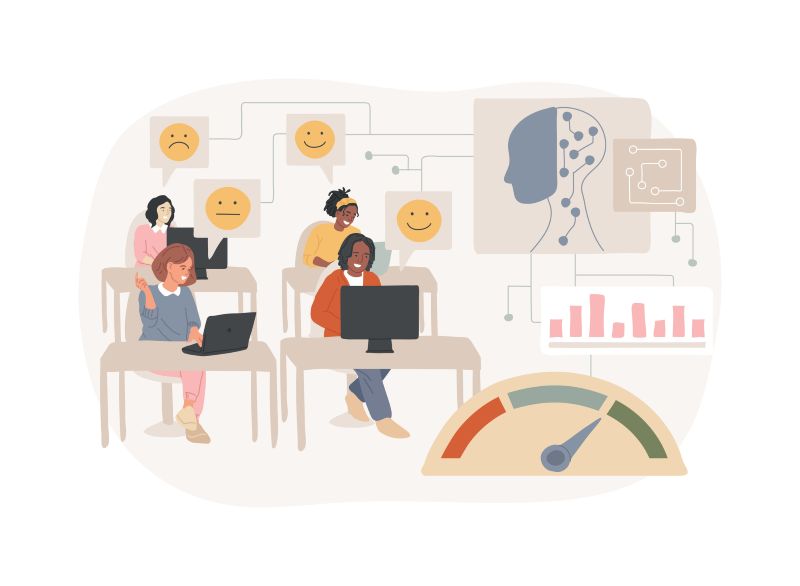
Plenty of contact centers today struggle with the same problem. Numbers like average handling time look fine, but for some reason, customers are still complaining. That's because how a customer actually feels during an interaction doesn't always show up in traditional metrics.
You hear it all the time from analysts, and they're right. Most business data sits in an unstructured pile, and customer conversations take up a huge part of it. When that much insight goes unused, it's no surprise your CSAT might feel stuck. That's where sentiment tools step in.
They use natural language processing (NLP) to read the tone behind what customers say, catching frustration, relief, confusion, and everything in between. With NLP sentiment analysis, every call, chat, and email becomes easier to read, and you finally see how people actually felt when they talked to your team.
What Is Sentiment Analysis?
If you've ever pulled a random call recording and thought, "Wow, that went off the rails fast," you already understand why sentiment analysis exists. It's a way to read the emotional aspects of a conversation fast, without listening to endless hours of audio.
AI tools "listen" to calls with NLP, picking up on the customer's wording, contextual insights, and little cues that signal stress or relief. They pick up frustration in a long pause, confusion in a run of short questions, or satisfaction when the tone turns warm. Tools built with NLP sentiment analysis are trained to recognize these patterns the same way a seasoned supervisor does, only at a scale no human could handle.
The output comes in a few forms:
- A simple sentiment label so you can scan interactions quickly.
- Emotion tags, which highlight things like irritation, uncertainty, or excitement.
- A sentiment score that shows how strong the emotion was.
Topic-specific clues that tell you what the emotion was tied to, whether it was billing, the IVR, the product, or the agent's tone.
This matters because most contact centers only review a tiny slice of conversations. Everything else disappears into storage. Sentiment analysis in contact centers changes that. It scans the full pile, pulls out the moments worth paying attention to, and helps teams understand the emotional side of service that usually goes unseen.
How Sentiment Analysis Works
Sentiment analysis, often built into speech analytics tech, works by taking all of the interactions that happens inside of a contact center and turning it into something your team can analyze without spending all day listening.
The process usually moves through a few stages.
- Transcription: A recording becomes text. That sounds simple, but it's the part that opens everything up. Modern speech engines have come a long way. Accuracy has improved to the point where many studies report word error rates around ten percent in clear conditions, which is good enough for analysis and coaching work.
- Cleaning and organizing the text: The AI system removes the noise, separates speakers, and breaks the conversation into segments. This gives the model a clean surface to read instead of a jumble of timestamps and filler sounds.
- Language understanding: This is where natural language processing takes over. The model reads the text and looks for phrases that signal emotion, sudden shifts in tone, repeated questions that might indicate confusion, and specific terms.
- Pattern recognition: Older systems lean on word lists. Newer ones use machine learning and transformer-based models, which means they learn from huge collections of real conversations. These models pick up on things like rising frustration spread across several conversations, or subtle signs of urgency.
- Scoring: Every interaction ends up with a sentiment label, a numeric score, and emotional markers that point out frustration, confusion, or relief. Some tools also include optional topic tags that show what triggered the reaction. They can also feed insights back into analytics dashboards, QA workflows, and reports.
All of these steps happen in an instant, which is why sentiment analysis tools save companies hours that would have been spent searching through conversations manually.
Why Sentiment Analysis Is Beneficial for Your Business
Sit with enough customer calls and you start to pick up the rhythms. Some agents have this calm, steady tone that settles people right away. Some calls go sideways because one tiny detail slipped past. And some issues show up so often that you can almost guess the first line the customer's going to say. Sentiment Analysis helps you catch all of those moments without relying on memory or luck.
Here's what it does for contact centers.
1. Enhances Agent Coaching and Quality Management
Anyone who's supervised a team knows how uneven coaching can get. You pull a few calls, hope you're choosing the right ones, and try to give feedback that feels fair. The problem is simple. You're listening to a tiny slice of the work, so your coaching is limited to whatever happened to show up in your queue that day.
Sentiment data changes that entirely. Instead of guessing which calls need attention, you gain visibility into emotional trends across every interaction.
Here's where it helps the most:
- You catch the "quiet escalations." Not every upset customer raises their voice. Some shut down. Some get short. Some sound polite while clearly giving up. Sentiment scoring reveals those calls within seconds.
- You can coach patterns, not one-offs. Maybe one agent explains things too quickly. Maybe another struggles when a customer starts the call already frustrated. Those patterns show up clearly when you have emotion data for every interaction.
- High performers become easier to learn from. Every team has a few agents who somehow keep customers calm during rough calls. Sentiment traces help you see exactly where they turned things around.
- Feedback becomes less subjective. You're no longer relying on random sampling. You have evidence from real emotional signals.
The results are significant.
The numbers aren't small either. Teams that use emotion-driven coaching have seen customer retention lift by roughly 25 percent once supervisors shifted from generic feedback to behavior-specific guidance. That's the kind of improvement that shows up in both CSAT and agent morale. When reps feel supported and managers feel informed, everyone benefits.
2. Improves First Contact Resolution (FCR)
FCR is one of those metrics everyone talks about, but very few teams truly understand. You can track repeat calls, but the "why" behind them often disappears. Sentiment fills in the missing pieces.
When you look at emotional patterns across thousands of calls, a few things jump out quickly:
- Customers tend to hit frustration at the same moments. Payment questions, password resets, unclear policies, warranty conditions, and long verification steps. If those moments regularly show sharp drops in sentiment, you've found the root of many repeat contacts.
- Some issues feel resolved to the agent but not to the customer. The agent may close the ticket thinking everything's fine, but the sentiment score tells a different story. Those customers often call back.
- Certain handoffs trigger emotional dips. Transfers, holds, or being bounced between channels are some of the biggest sentiment killers. Seeing these patterns helps teams redesign flows before they impact FCR.
- You learn which agents recover troubled calls. These agents often prevent repeat contacts without even realizing it. Their approaches can be taught and scaled.
The insights you gain are how you improve first call resolution rates drastically, and every one percent boost in FCR tends to create a one percent lift in customer satisfaction. That makes emotional visibility extremely valuable when you're trying to improve resolution quality.
Here's a real example supervisors often recognize. A billing explanation sounds clear to the agent, but the customer's tone never recovers. They end the call sounding resigned or unsure. That's a classic repeat-contact setup. Sentiment analysis flags those calls long before the second call even happens. Teams can follow up quickly or adjust scripts to prevent confusion the next time around.
3. Monitors Brand Perception Across Different Channels
If you've ever watched a brand take a hit online before the phones even start ringing, you know how fast sentiment can spread. A glitch in an app, a billing hiccup, a misunderstood announcement, and suddenly the comment sections fill up before anyone has time to draft a response. That wave of emotion is easy to miss if your team only watches call metrics.
This is where sentiment analysis helps protect reputation. It keeps an eye on the full customer conversation, not just the one happening in your queue.
You start to see patterns like:
- Rising tension during a product release
- Confusion climbing after a policy update
- Positive reactions to new features
- Spikes in negative emotion tied to outages or delays
There's real money tied to understanding how customers feel. Studies show that people who feel connected to a brand spend up to 140 percent more over the course of their lifecycle. You can't build that kind of loyalty if you're blind to the emotion sitting inside your own conversations.
Sentiment also helps you stay ahead of the phone calls. If the same complaint shows up repeatedly on social media or chat, your voice teams can prepare before the lines get heavy. That one step alone takes pressure off the floor.
4. Optimizes Workflows and Automations
There's a moment most supervisors know well. You read a transcript or hear a recording and think, "If we'd caught that comment live, this whole situation could've been saved." Maybe the customer hinted at leaving. Maybe they showed clear confusion. Maybe the agent didn't notice the urgency in their voice. Those are the moments sentiment automation is built to catch.
When customer sentiment detection runs in the background, it picks up signals like:
- "Cancel my service"
- "Thinking of switching"
- "This isn't worth it"
- "I've called three times already"
Sharp drops in tone or emotional clarity
Those clues can trigger smart workflows right away, for example:
- Sending the call to a retention specialist
- Alerting the agent mid-conversation so they slow down and reset
- Creating a follow-up task when a customer ends the call in a negative state
- Routing highly emotional cases to senior staff automatically
- Starting a recovery workflow so the customer doesn't call back angry
Teams spend less time guessing and more time acting. Instead of sifting through queues, your system surfaces the conversations that need human touch right away. It keeps small problems from snowballing. It helps agents intervene at the right moment. It also frees up senior staff who by showing them the problems early.
The side benefit supervisors love is how calm the floor feels. When the worst calls get handled earlier and the repeat contacts start dropping, the entire environment steadies.
5. Supports Product and Policy Improvements
If you've ever tried to summarize "what customers are saying lately," you know how tricky it gets. Every channel tells a slightly different story. Surveys lean positive because only a few people fill them out. Emails skew formal, calls swing emotional, and chat messages are short and blunt. But when you look at sentiment trends across all of them, the truth becomes much clearer.
This is where sentiment tools pay off for product and operations teams.
A few things happen almost immediately:
- The same pain point keeps showing up in different channels
- One confusing policy section drives a large share of negative emotion
- A new release triggers small spikes in frustration you didn't see before
- Customers express relief or satisfaction when something finally works as expected
You start to see the emotional "hot zones" in your customer journey, and once you see them, you can fix them. Sentiment also highlights problems that customers never articulate directly. For example:
- A billing explanation that consistently drops sentiment even when the agent follows the script
- A knowledge base article that seems fine internally but confuses customers quickly
- A policy wording that causes emotional decline across dozens of calls
These patterns usually hide in plain sight until you have emotional data mapped across the whole volume. For product managers, this becomes a cheat code. Instead of sorting through scattered complaints, they get a ranked list of what truly upsets customers. For operations leaders, it helps prioritize which processes need attention. For agents, it removes the pressure of explaining things customers consistently find unclear.
Making Sentiment Analysis Your Secret Weapon
When you spend your days inside a contact center, you develop a feel for customers. You can tell when a call is headed in the wrong direction or when an agent turns something around with a simple moment of clarity. The challenge has always been seeing those moments at scale. Sentiment analysis finally gives teams that reach.
With emotion scoring running across calls, chats, email, and social media, you start to see patterns you couldn't catch by hand. You notice where customers consistently lose patience. You see which agents naturally calm tense situations. You spot policies or processes that quietly create repeat work. You also learn when customers leave happier than they sounded at the start, which is something most dashboards never capture.
All of this rolls up into a clearer picture of your service. Instead of reacting to loud complaints or random survey results, you get a steady read on how people feel across every interaction. That's the real benefit of sentiment analysis in contact centers.
%20-%20Google%20Ads.png)