iceAI Studio vous donne un contrôle total sur les connaissances de vos AI Agents et sur la façon dont ils dirigent les clients, favorisant ainsi des résolutions plus rapides et de meilleures expériences.
De la norme PCI-DSS à la certification SOC 2, le centre de contact ice est bâti sur un cadre de conformité qui saura satisfaire votre équipe de sécurité.
Silos de données en centre de contact : un guide rapide
Kent Mao
Dernière mise à jour :
December 14, 2023
Les silos de données sont un problème bien connu dans le monde des centres de contact, mais de nouvelles solutions logicielles peuvent aider.
Que vous soyez une petite entreprise ou une grande organisation, les silos de données peuvent poser un problème majeur pour votre centre de contact. Si les données ne peuvent pas être consultées rapidement et efficacement au sein de votre organisation, il est possible que vous soyez aux prises avec des silos de données.
Mais que sont exactement les silos de données et comment peut-on les éliminer? Dans cet article, nous expliquerons tout ce que vous devez savoir sur les silos de données dans les centres de contact.
Que sont les silos de données?
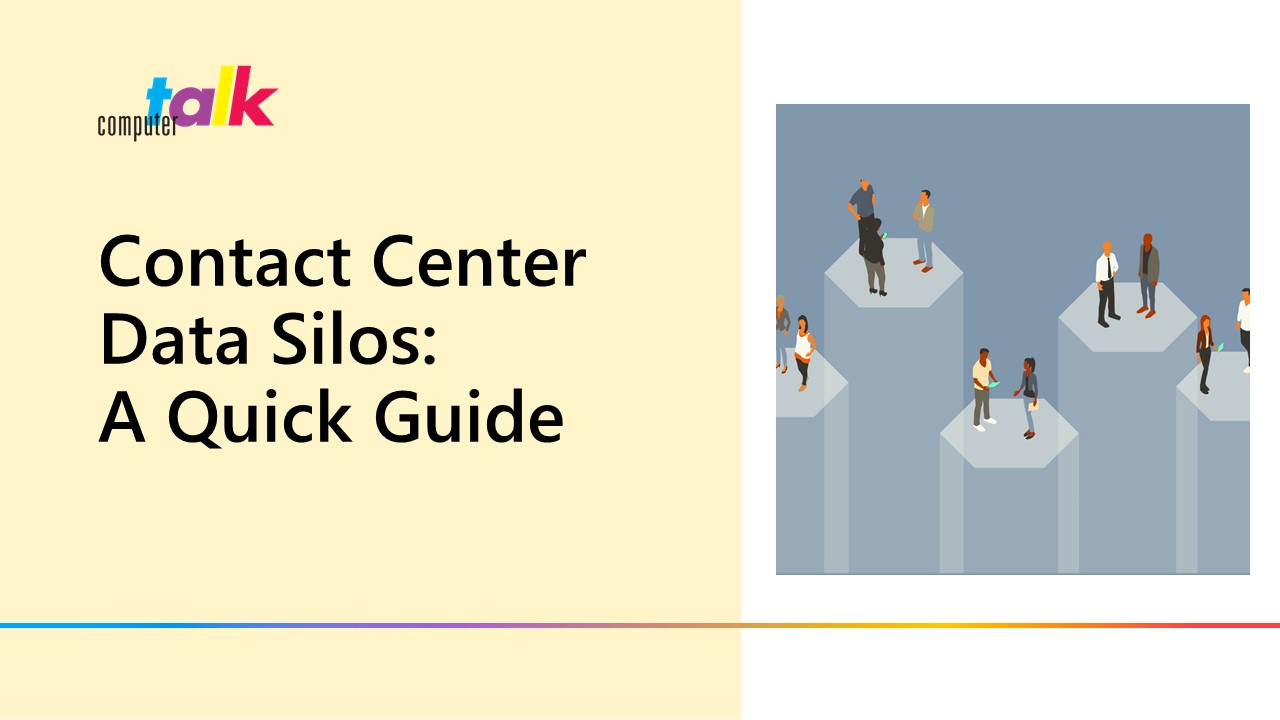
Un silo de données est un ensemble d'informations accessible par un seul service et inaccessible aux autres parties de l'entreprise.
Vous pouvez les considérer comme des îlots de données, isolés et coupés des autres services et équipes.
Lorsque les informations ne sont pas partagées entre les différentes équipes d'une entreprise, cela crée un silo de données. Comme les grandes entreprises ont tendance à avoir de nombreuses équipes différentes — travaillant souvent de manière isolée les unes des autres — les silos de données sont un problème courant.
Que sont les silos de données dans les centres de contact?
Lorsque les agents d'un centre de contact interagissent avec un client, les données sont généralement stockées quelque part pour une utilisation ultérieure. Cependant, ces données sont souvent regroupées en fonction de la méthode de communication utilisée : téléphone, courriel, clavardage en direct, médias sociaux, etc.
Par conséquent, les agents doivent souvent jongler avec plusieurs systèmes lorsqu'ils interagissent avec les clients. En fait, une étude récente de Forrester a révélé que 84 % des responsables de centres de contact indiquent que leurs agents ont entre 4 et 10 applications différentes ouvertes lors d'une interaction client typique.
Les entreprises peuvent également s'appuyer sur différents outils de suivi ou logiciels qui ne sont pas entièrement intégrés les uns aux autres. Par exemple, les appels téléphoniques peuvent être consignés dans un logiciel CRM tandis que les messages instantanés sont stockés sur une autre plateforme.
Les données peuvent facilement devenir cloisonnées s'il n'existe pas de base de données centrale qui effectue le suivi des interactions avec les clients sur différentes plateformes.
Pourquoi les silos de données sont-ils néfastes pour les entreprises?
Il existe de nombreuses raisons pour lesquelles les silos de données dans les centres de contact nuisent à l'expérience client et à votre entreprise dans son ensemble.
Les silos de données empêchent les agents du centre de contact de connaître l'historique complet du client. En d'autres termes, l'agent ne dispose pas de toutes les données et de l'historique de contact du client au même endroit. Cela ralentit les agents du centre de contact qui manquent d'informations pour vraiment comprendre les besoins du client et fournir des solutions à ses problèmes.
Les silos de données peuvent entraîner des expériences client négatives. Sans avoir toutes les données à leur disposition, les agents du centre de contact sont plus susceptibles de créer une impression négative. Par exemple, ils peuvent demander des informations qu'ils devraient déjà posséder ou prendre beaucoup de temps pour trouver les bonnes informations. Les expériences client négatives, telles que les longs temps d'attente, les transferts multiples entre agents et le fait que les clients doivent se répéter, sont autant de problèmes qui découlent des silos de données au sein d'un centre de contact.
Les silos de données peuvent augmenter les coûts et réduire la productivité. La présence de silos de données au sein de votre centre de contact entraîne une perte de temps et d'argent, ce qui finit par augmenter les coûts de l'entreprise. Ils créent également des barrières entre les différentes équipes, ce qui entraîne des inefficacités et des goulots d'étranglement. L'élimination des silos de données améliore la productivité des agents et l'efficacité opérationnelle de votre centre de contact.
Comment identifier les silos de données
Afin de résoudre les problèmes associés aux silos de données, vous devez d'abord être en mesure de les identifier. Mais connaissez-vous les signes d'un silo de données au sein d'un centre de contact?
Signes courants
Manque de données au sein d'une équipe ou d'un service, nécessitant souvent une communication interfonctionnelle pour les obtenir
Données incomplètes ou obsolètes dans les bases de données ou les dossiers
Les équipes sont incapables d'accéder rapidement ou dans un délai raisonnable à des ensembles de données spécifiques
Souvent, ces signes peuvent passer inaperçus, surtout au sein des grandes organisations où les équipes et les services fonctionnent de manière indépendante.
Cependant, un moyen sûr de savoir que votre entreprise souffre de silos de données est l'augmentation fulgurante des coûts informatiques liés à la conservation et à la récupération des données.
Comment éliminer les silos de données dans votre centre de contact
Les silos de données sont courants au sein des entreprises et peuvent survenir pour diverses raisons. En fin de compte, les organisations doivent s'efforcer d'identifier et de résoudre ces silos afin d'améliorer leur efficacité et leur performance commerciale.
Voici quelques étapes pour aider à éliminer les silos de données dans votre centre de contact :
Investissez dans un logiciel capable d'intégrer les données provenant de différents systèmes
De nombreuses entreprises dépendent encore de systèmes hérités obsolètes dotés de capacités d'intégration faibles, voire inexistantes. Pour surmonter les silos de données, les entreprises doivent investir dans des solutions logicielles modernes permettant des transferts rapides de données et la possibilité de croiser les informations au besoin. L'une de ces solutions est le logiciel qui intègre tous vos systèmes de données en un seul, également appelé plateforme d'intégration en tant que service (iPaaS). Ces solutions fonctionnent en fournissant une plateforme centralisée pour gérer et accéder aux applications et aux données infonuagiques. Parmi les principaux fournisseurs d'iPaaS, on retrouve des entreprises comme Zapier, Workato et MuleSoft.
Choisissez une solution de centre de contact omnicanal
Les solutions de centre de contact dotées de capacités omnicanales, comme le logiciel ice de ComputerTalk, sont conçues pour empêcher le cloisonnement des données. Les centres de contact omnicanaux permettent aux clients d'interagir avec votre entreprise via divers canaux : téléphone, courriel, clavardage en direct, et plus encore. Contrairement aux systèmes hérités, la solution centre de contact ice de ComputerTalk s'intègre aux principales solutions CRM, telles que Salesforce et Microsoft Dynamics. Grâce à ces intégrations CRM, les données client peuvent être regroupées au même endroit, quel que soit le canal utilisé pour l'interaction. Ainsi, les agents du centre de contact peuvent récupérer rapidement et efficacement toutes les informations d'un client.
Tirez parti de la puissance des outils d'IA
L'IA générative devient rapidement l'un des outils les plus puissants dans le monde des centres de contact. Non seulement cette technologie peut améliorer l'expérience client, mais elle a également la capacité d'optimiser les flux de travail des agents et les tâches quotidiennes. Par exemple, les bons outils d'IA peuvent passer au crible de grandes quantités de données et faire ressortir intelligemment les informations requises. Les outils d'IA peuvent également automatiser le processus de collecte et de stockage des données. Enfin, les agents conversationnels (chatbots) basés sur l'IA peuvent poser des questions et fournir des informations contextuelles pour préparer un agent du centre de contact avant une interaction en direct. Bien que les applications d'IA soient encore très récentes dans les centres de contact d'aujourd'hui, il est clair qu'elles peuvent aider à résoudre le problème des silos de données.
Résumé
Les silos de données sont beaucoup trop courants dans les entreprises d'aujourd'hui, et les centres de contact sont un domaine où ils peuvent causer des dommages importants. Si vous êtes responsable d'un centre de contact et que vous rencontrez des obstacles liés aux données et des inefficacités, les silos de données pourraient en être la cause.
Heureusement, les solutions modernes de centre de contact ont été conçues pour surmonter les silos de données en tirant parti des intégrations CRM et en stockant les informations client dans une base de données centrale.
Si vous utilisez encore une plateforme de centre de contact héritée avec des fonctionnalités de stockage de données obsolètes, il est peut-être temps d'envisager une mise à niveau.
Abonnez-vous à notre infolettre
Merci de vous être abonné!
Bienvenue dans la communauté de l'infolettre de ComputerTalk. Surveillez votre boîte de réception pour nos mises à jour mensuelles.
Oups! Une erreur est survenue lors de la soumission du formulaire.
%20-%20Google%20Ads.png)